Key points#
- The right screenings depend on your age, sex, history, and risk, not a one-size checklist.
- More screening is not automatically better; a good test catches a condition early in people likely to benefit.
- Screening can cause harm through false alarms, unnecessary procedures, and overdiagnosis.
- Independent bodies grade screenings by evidence, and a clinician tailors the list to you.
Screening sits at the heart of preventive medicine, and it carries an intuitive appeal: catch problems early, before they cause harm. That intuition is often right, and the best screening tests save lives. But screening is more subtle than more is better, and understanding why turns a vague anxiety about getting every possible test into a clear-eyed approach to getting the right ones.
What makes a screening test worthwhile#
A screening test is offered to people without symptoms, in the hope of catching a condition early. For that to be a good idea, several things need to line up. The condition should be one where finding it early genuinely changes the outcome. The test should be reasonably accurate. And the benefits of finding the condition early should outweigh the downsides of the testing itself.
That last point is the one most people overlook. Screening is not free of harm. A test can raise a false alarm, leading to anxiety and further procedures that turn out to be unnecessary. It can find something that looks concerning but would never have caused trouble. The value of a screening test is the benefit it brings minus the harm it causes, and a good test is one where that balance is clearly positive for the people being screened.
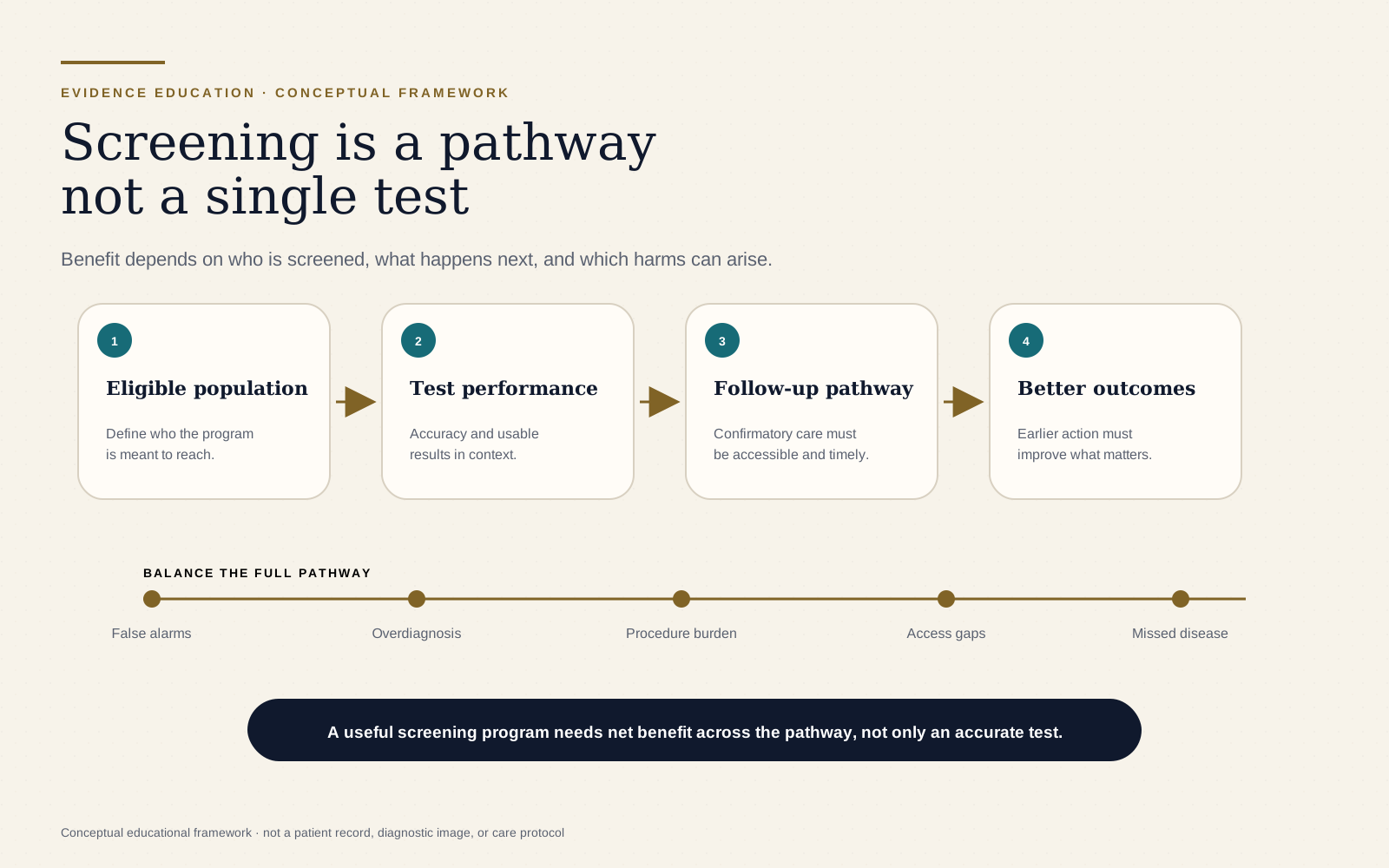
Scroll horizontally to inspect the full figure. A complete text version follows.
Read the figure in text
The pathway moves from a defined eligible population to test performance, accessible follow-up, and improved outcomes. A parallel line identifies false alarms, overdiagnosis, procedure burden, access gaps, and missed disease as potential harms.
Why more is not always better#
The instinct that more testing must be safer is understandable, and it is sometimes wrong. Two specific harms explain why.
The first is the cascade of false alarms. No test is perfect, so screening large numbers of healthy people inevitably produces some results that look abnormal but are not. Each of those can lead to more tests, sometimes invasive ones, with their own risks, plus real worry, all to rule out a problem that was never there.
The second, and more counterintuitive, is overdiagnosis. This is finding a condition that is technically real but would never have caused harm in that person's lifetime, and then treating it anyway. The person gains nothing, because there was nothing to prevent, but they take on all the burden and risk of treatment. Overdiagnosis is one of the main reasons some widely available tests are not recommended for everyone.
None of this means screening is bad. It means screening is a tool to be aimed carefully, not sprayed widely.
How the recommendations are made#
Because the balance of benefit and harm can be hard to judge, independent expert bodies do the work of weighing the evidence. In the United States, the Preventive Services Task Force reviews studies and grades screenings, recommending some strongly, suggesting others be individualized, and advising against a few where the harms tend to outweigh the benefits. Other countries have similar bodies. These grades are not arbitrary; they reflect what the evidence shows about who benefits and who is more likely to be harmed.
This is also why a test can be right for one person and not another. A screening that makes sense at a certain age, or for someone with particular risk factors, may not make sense for everyone. The recommendation is tied to the person, not just the test.
Putting it together with your clinician#
The practical upshot is that the right list of screenings is personal. It depends on your age, your sex, your family history, your own health, and your risk factors. The most useful thing you can do is not to chase every available test, but to sit down with your clinician and ask which screenings the evidence supports for someone like you, and why.
It is also reasonable to ask the other direction. If a test is being offered, you can ask what the benefit is, what the possible harms are, and how likely each is. A good clinician will welcome the question, because choosing screenings thoughtfully is exactly what good preventive care looks like.
Building your own screening plan#
Resist the pull toward maximal testing, and aim instead for the right testing. The best screenings, used in the people most likely to benefit, are among the most valuable things medicine offers. But screening can also harm, through false alarms and overdiagnosis, which is why evidence-based bodies tailor their recommendations and why your clinician tailors them to you. Ask which tests the evidence supports for your age and risk, take the recommended ones seriously, and let go of the idea that more is automatically safer. Chosen well, screening is prevention at its best.
Sources and further reading
Questions and answers
Which health screenings are recommended?
It depends on your age, sex, history, and risk factors. Independent bodies such as the U.S. Preventive Services Task Force review the evidence and grade screenings, and your clinician tailors the list to you. There is no single checklist that fits everyone.
Is more screening always better?
No. A good screening test catches a condition early enough to help, in people likely to benefit. Screening can also cause harm through false alarms, unnecessary follow-up procedures, and overdiagnosis, so the goal is the right tests, not the most tests.
What is overdiagnosis?
It is finding a condition that would never have caused harm in a person's lifetime, then treating it anyway, with all the burden and risk that treatment carries. It is one of the main reasons some widely available tests are not routinely recommended.
Why are some popular tests not recommended for everyone?
Because for some tests, in some groups, the evidence shows the harms can outweigh the benefits. That does not mean the test is useless; it means it should be used selectively, based on individual risk, rather than offered to everyone.