Physician-scientist and medical humanities
What ORCID Is and Why Persistent Identifiers Matter
An ORCID iD distinguishes a research contributor from similar names and connects that person to works and affiliations through traceable metadata.
Evidence and health education collection
Plain-language health education and evidence explainers spanning prevention, research literacy, chronic disease, and whole-person care.

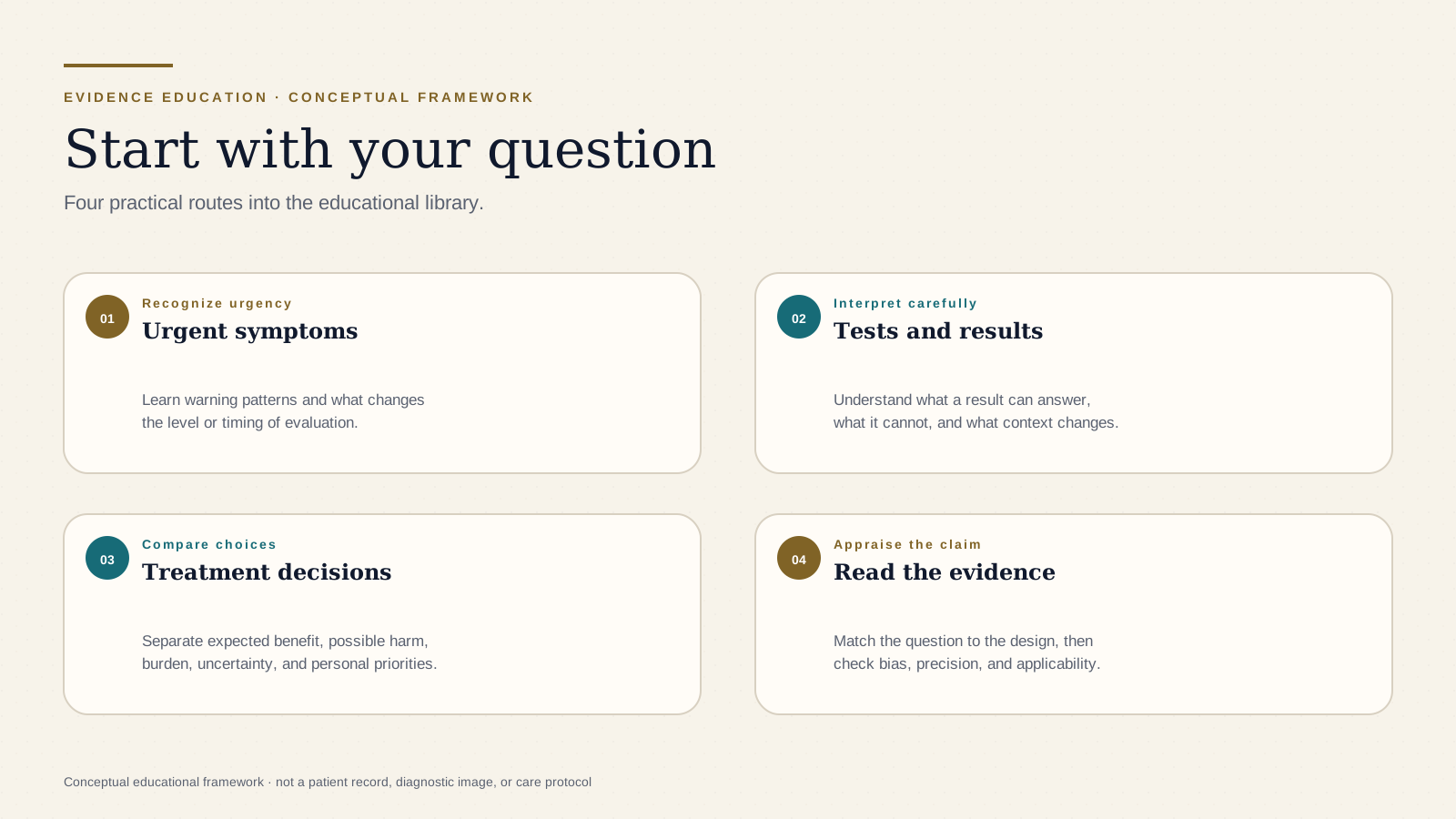
Scroll horizontally to inspect the full figure. A complete text version follows.
The figure presents four entry points. Urgent symptoms focuses on warning patterns and timing. Tests and results focuses on what a result can and cannot answer. Treatment decisions compares benefit, harm, burden, uncertainty, and priorities. Reading the evidence matches a question to a study design and checks bias, precision, and applicability.
An ORCID iD distinguishes a research contributor from similar names and connects that person to works and affiliations through traceable metadata.
Preprint screening checks scope, ethics signals, privacy, duplication, and possible harm, but it does not certify the research through peer review.
The EIC Accelerator can combine a project grant with an equity or quasi-equity investment, but the two components follow different decisions.
Journal embargoes coordinate reporting around publication; prior-publication rules decide whether earlier sharing affects manuscript eligibility.
Laboratories combine population, clinical, family, functional, and computational evidence to classify germline sequence variants.
Early HTA tests the potential value of a health innovation while its design, evidence plan, and investment choices can still change.
Why this growing educational library exists, how its sources are selected, and how Jasaman Tojjar reviews every case analysis and evidence guide.
Stress incontinence leaks with a cough; urge incontinence follows sudden urgency. Pelvic floor and bladder training are first-line for both.
What the childhood vaccine schedule covers from birth to 18, why babies get several shots at once, and how vaccine safety is monitored.
Who should get the Shingrix shingles vaccine, how well it works, and its side effects, based on current CDC and ACIP recommendations.
Restless legs syndrome: why current guidance checks iron and ferritin first, favors gabapentinoids, and treats dopamine agonists with caution.
How to tell ordinary PMS from PMDD: the severity, timing, and functional impairment that mark a treatable disorder, plus what the evidence supports.
How to tell viral, bacterial, and allergic pink eye apart, what antibiotic drops really do, and the red-eye warning signs that need urgent care.
Recognize peripheral artery disease: what claudication feels like, why legs ache when walking, and how the ankle-brachial index confirms it.
How the purulent versus nonpurulent split sorts skin infections, why it guides antibiotic choice, and the red flags that mean urgent care.
What causes high potassium, its symptoms, why kidney disease and ACE inhibitors raise it, and when hyperkalemia becomes a medical emergency.
Home care for hemorrhoids and anal fissures, how to tell them apart, and the rectal bleeding red flags that mean you should get checked.
Evidence-based heartburn relief: which self-care steps and medicines work, how antacids, H2 blockers, and PPIs differ, and when to get checked.
Plain facts about genital herpes: how HSV spreads, what type-specific testing can and cannot tell you, and what antiviral treatment achieves.
Most gallstones cause no symptoms and are left alone. Learn which ones need surgery, what a gallbladder attack feels like, and the red flags.
A food allergy is an immune reaction that can be dangerous; an intolerance is non-immune. How to tell them apart and test wisely.
How to read a child's fever calmly: age-based red flags, which comfort measures have evidence, and when a fever means it is time to get care.
Tension-type, migraine, and cluster headaches differ in pain, timing, and triggers. Learn how to tell them apart and which red flags need urgent care.
Why the room spins when you lie down is often BPPV. How vertigo differs from lightheadedness, and how the Dix-Hallpike and Epley maneuvers work.
How deprescribing and a structured polypharmacy review work in older adults, when to stop medicines safely, and how to spot drug-caused symptoms.
How to relieve chronic constipation: start with fiber and fluids, step up to an osmotic then a stimulant laxative, and know the alarm signs that need care.
How to recognize bipolar disorder, tell bipolar from unipolar depression, spot hypomania, and know when primary care refers to psychiatry.
How rate control, rhythm control, and early rhythm control differ in atrial fibrillation, what EAST-AFNET 4 changed, and how the choice is made.
Naltrexone and acamprosate are non-controlled medicines that help many people drink less or stop. Here is what the evidence shows.
Most sinus infections are viral and clear without antibiotics. Learn the viral vs bacterial clues, the 10-day rule, and what actually relieves symptoms.
SURMOUNT-5 head-to-head data on tirzepatide (Zepbound) versus semaglutide (Wegovy) for weight loss: how much each works, side effects, and choosing.
Most sore throats are viral. The Centor (McIsaac) score estimates strep odds and when a throat swab or antibiotics are actually worth it.
No. This site is an educational evidence library or diagnosis. Learn what it is, who is responsible, and when to see a clinician.
Over-the-counter CGMs are marketed to healthy people, but the evidence for benefit is thin. Here is what glucose data does and does not tell you.
Flu, COVID, colds, and RSV overlap heavily. Compare symptoms, testing, and how long each stays contagious, plus when to test and seek care.
Acute bronchitis is almost always viral. The cough can last up to three weeks, and antibiotics rarely help. Here is the evidence and the red flags.
A screening test's value depends on population risk, test thresholds, treatment benefit, follow-up capacity, harms, and the full care pathway.
BI-RADS 4 means a breast imaging finding is suspicious enough for tissue sampling, not that imaging has diagnosed cancer.
Whole-body MRI avoids ionizing radiation, but incidental findings, false results, overdiagnosis, and missing outcome evidence limit screening use.
WHO's six AI ethics principles become useful when translated into concrete design, procurement, deployment, monitoring, and redress controls.
Section 1557 makes covered health entities responsible for identifying and mitigating discrimination risk in patient care decision-support tools.
Testing for alpha-1 antitrypsin deficiency belongs in routine COPD care and several lung, liver, skin, vascular, and family settings.
A pooled estimate can mislead when studies answer different questions, use incompatible outcomes, contain major bias, or vary in effect direction.
Large health datasets shrink random error but can preserve bias, weak proxies, leakage, missingness, and drift with impressive precision.
Joint imaging should answer a management question. Trauma, red flags, examination, and suspected tissue determine whether X-ray, ultrasound, or MRI fits.
Safe health AI needs a tested abstention pathway for unfamiliar, incomplete, conflicting, or uncertain cases, plus a reliable human fallback.
A practical reading of WHO's guidance on governing generative AI that can process text, images, audio, or video in health settings.
Twin studies show strong genetic liability for diabetes while discordant identical twins prove that genes do not determine one person's outcome.
Tumor mutational burden counts selected mutations per megabase. It can inform immunotherapy choices, but platform and tumor context matter.
Cardiac troponin detects heart-muscle injury. A heart attack diagnosis also requires a changing pattern and evidence of ischemia.
Time in range summarizes continuous glucose monitor readings within a defined interval. Learn the standard metrics, evidence, limits, and safe interpretation.
The 2026 WADA Prohibited List classifies banned substances and methods, but safe medication decisions require more than a name search.
The EVALI investigation linked vitamin E acetate in THC vaping products to lung injury through epidemiology, product tests, and lung-fluid analysis.
The U.S. Public Health Service syphilis study used deception and withheld treatment. Its disclosure accelerated federal research protections.
Intensive programs produce modest average weight loss, improve diabetes risk in selected groups, and require maintenance rather than a short course.
The STAR*D debate shows how outcome definitions, analysis populations, missing data, and protocol fidelity can materially change a trial's headline.
REVISE found pantoprazole reduced clinically important upper gastrointestinal bleeding during invasive ventilation without changing 90-day mortality.
History and examination set pretest probability, identify urgency, and guide testing. Their value depends on technique, reliability, and the clinical question.
Fleischner guidance uses nodule size, solidity, number, and cancer risk to limit unnecessary follow-up while finding nodules that need closer evaluation.
FEV1/FVC describes how much of a forced breath leaves in the first second. It detects obstruction but does not name the cause or severity alone.
Early sepsis care matters, especially in shock, but bundle components differ and the 2026 guideline stratifies antibiotic urgency by certainty.
DLCO estimates how readily carbon monoxide moves from inhaled gas into blood. Learn what lowers or raises it, how technique matters, and why KCO differs.
The apnea hypopnea index counts breathing events per hour of sleep. It does not fully measure oxygen stress, symptoms, sleep disruption, or individual risk.
The 2024 USPSTF update kept exercise and selective multifactorial care while moving vitamin D into a separate prevention review.
SPF is a standardized sunburn-protection ratio, not a timer or a complete measure of UVA protection. Learn how labeling, amount, and reapplication matter.
A practical guide to claims, electronic records, registries, devices, and linked data, including what each source records and systematically misses.
How procalcitonin and C-reactive protein can support antibiotic stewardship without replacing diagnosis, severity assessment, cultures, or reassessment.
Orphan designation creates development incentives for rare-disease products. It is not approval, proof of effectiveness, or automatic exclusivity.
Mendelian randomization uses genetic variants as instruments for causal questions. Its conclusions depend on relevance, independence, exclusion, and design.
Trustworthy science communication makes evidence traceable, calibrates certainty, quantifies effects, discloses interests, and corrects errors visibly.
A patient-facing AI explanation should clarify purpose, inputs, basis, uncertainty, options, accountability, and recourse, not merely display model internals.
A useful biomarker must be measurable, valid for a defined purpose, and capable of improving a decision. Association alone is not enough.
Lipoprotein(a) is an inherited apoB particle linked to atherosclerotic disease and aortic stenosis. Learn testing, units, interpretation, and limits.
Major replication projects found smaller effects, mixed repeatability, and practical barriers. Their results require more nuance than a single failure rate.
Peptides are short amino-acid chains with diverse biological roles. Learn how peptide medicines work, why delivery is difficult, and how to assess claims.
Informed consent is an ongoing, voluntary communication process in clinical research, not a signature. Learn its elements, safeguards, and limits.
ICH E6(R3) modernized GCP through quality by design, proportionality, clearer accountability, data governance, and support for varied trial designs.
Heritability describes variation in a population under particular conditions; it does not measure genetic destiny, immutability, or an individual's risk.
Health technology assessment combines clinical, economic, ethical, social, and organizational evidence to inform transparent health-system decisions.
Health economics examines scarcity, opportunity cost, incentives, equity, and how costs and outcomes change when health systems choose among alternatives.
Good primary care provides first contact, continuity, comprehensive care, coordination, prevention, and decisions grounded in a person's goals and context.
Good Clinical Practice protects participants and result reliability through ethics, consent, quality by design, oversight, data integrity, and transparency.
Good clinical evidence fits a precise question and withstands scrutiny for bias, precision, relevance, transparency, replication, and applicability.
GWAS identify statistical links between genomic regions and traits. Learn how they work, why association is not causation, and what scores inherit.
FRAX estimates 10-year hip and major osteoporotic fracture probability. Learn what goes into the estimate, what it omits, and how thresholds differ.
Foundation models can be adapted across medical tasks, but broad pretraining does not establish clinical validity, safety, regulation, or patient benefit.
External validity asks whether a study's results apply to a defined target beyond the study, across people, settings, treatments, outcomes, and time.
Ejection fraction is the percentage of a ventricle's filled volume pumped out with each beat. Learn what it measures, how methods differ, and what it misses.
Decision-curve analysis tests whether using a model could improve decisions across plausible thresholds while making assumptions and limits visible.
Patient decision aids improve knowledge and clarify values, but cannot choose for someone, guarantee outcomes, or replace clinical conversation.
Learn how ctDNA molecular residual disease testing estimates recurrence risk, why a negative result cannot prove cure, and when treatment utility needs trials.
Learn what BNP and NT-proBNP reflect, how they help evaluate heart failure, and why age, kidney function, obesity, rhythm, medicines, and setting matter.
Learn how FDA evaluates biosimilar insulin through analytical similarity, potency, PK and PD studies, immunogenicity, manufacturing quality, and labeling.
Learn how laboratories measure MIC, apply breakpoints, and report susceptible, intermediate, or resistant results, plus the limits of an antibiogram.
ANNEXA-I found better hematoma control with andexanet than usual care but more thrombosis. Learn what the trial did, what it did not prove, and the US update.
Learn what FDG PET/CT shows, how standardized uptake values are calculated, and why inflammation, glucose, timing, lesion size, and scanner methods matter.
An EU joint clinical assessment analyzes relative clinical effects for national HTA. It does not decide price, reimbursement, or overall added value.
A urine albumin-to-creatinine ratio can reveal kidney damage before eGFR falls. Learn the A1, A2, and A3 categories and why repeat testing matters.
A vaccine correlate of protection links an immune marker with reduced risk. Learn the evidence needed, how correlates speed decisions, and their limits.
A tumor-agnostic approval targets a molecular feature across specified cancers, not every tumor. Learn how basket trials, testing, labels, and uncertainty fit.
Clinically proven is a claim, not a study design. Learn how to check the exact product, outcome, comparator, trial quality, effect size, harms, and regulation.
Weight is one health measure, not a complete diagnosis. Learn how BMI, waist size, blood pressure, glucose, lipids, function, and context fit together.
Routine vitamin D blood testing in asymptomatic adults has unproven benefit. Learn what 25-hydroxyvitamin D measures and when targeted testing differs.
Routine vitamin D or calcium supplements prevent few or no fractures in most community adults. Learn what trials show and which clinical groups are different.
Visceral fat surrounds abdominal organs and tracks cardiometabolic risk. Learn what waist size, imaging, BMI, and laboratory markers can and cannot show.
Sham-controlled vertebroplasty trials show why procedure studies need credible placebos, careful fracture timing, and outcomes beyond pain improvement alone.
Verification bias occurs when disease confirmation depends on the test result or patient features. Learn how it distorts sensitivity and specificity.
Learn when AUA and ASRM guidance considers varicocele repair, what semen changes studies report, and why pregnancy and live birth matter beyond a lab result.
Vaccine efficacy measures relative risk reduction in a trial; effectiveness estimates performance in practice. Learn the designs, endpoints, biases, and limits.
Learn why the USPSTF recommends sun-protection counseling through age 24 for fair skin types and selectively offers it later in adulthood.
Learn how the USPSTF combines age, risk factors, and 10-year cardiovascular risk when recommending statins to prevent a first heart attack or stroke.
U=U means sustained HIV viral suppression prevents sexual transmission. Learn what the studies showed, what undetectable means, and the message's boundaries.
Learn what LDL-C, HDL-C, triglycerides, non-HDL-C, apoB, and lipoprotein(a) measure, and why a lipid panel must be read with overall risk.
How standardized mean differences combine outcomes measured on different scales, and why scale direction, variability, bias, and context matter.
Selection bias explained through recruitment, follow-up, referral, missing data, conditioning, and the checks that make study results more credible.
Rotator cuff pain and tears explained: symptoms, examination, imaging, rehabilitation, injections, surgery, and signs that need prompt assessment.
Why clinical models overfit, how optimism appears, and which validation practices reveal whether performance will travel beyond development data.
Competing events change the meaning of a survival curve. Cumulative incidence, cause-specific hazards, and Fine-Gray models answer different questions.
Carpal tunnel syndrome compresses the median nerve at the wrist. Symptom pattern, severity, and diagnostic uncertainty guide testing and treatment.
Cardiovascular risk scores estimate group-based probability over a stated horizon; the equation, outcome, population, and clinical context determine meaning.
Basal insulin covers background needs between meals, while bolus insulin addresses food and high glucose; safe use depends on patterns and timing.
Trials support selective care without antibiotics for some immunocompetent adults with mild uncomplicated diverticulitis, not for every patient.
Umbrella reviews synthesize reviews, but overlap, variable methods, stale searches, and inherited bias can overstate certainty.
The STONE trial found that starting with ultrasound lowered cumulative radiation while serious outcomes were similar to a CT-first strategy.
Cluster studies reveal heterogeneity within adult-onset diabetes, but proposed subtypes are not yet routine diagnostic categories or treatment rules.
Type 2 diabetes remission has a specific definition. Learn how it is measured, how it may occur, why relapse happens, and what follow-up remains necessary.
Learn why trigger finger catches, how it is diagnosed, and how observation, splinting, corticosteroid injection, and pulley release compare.
Trial registration records the planned question, while structured results reporting reveals completed studies and outcome changes.
Minimally disruptive medicine fits effective care to capacity by reducing avoidable appointments, monitoring, costs, and coordination work.
Gout guidelines support titration using serial serum urate, usually toward less than 6 mg/dL, while risks and disease severity shape care.
Treat-to-target insulin trials seek the same glucose goal, making hypoglycemia, dose, weight, safety, and usability central comparisons.
Prediction models can fail elsewhere when populations, measurements, workflows, treatments, and outcome definitions change.
Training creates a signal, while recovery permits adaptation. Learn how specificity, progression, fatigue, muscle, tendon, and aerobic systems interact.
Trials support modest improvement in several signs of facial photodamage with topical tretinoin, alongside common irritation and clear limits.
Stroke benefit generally falls with treatment delay, but eligibility depends on stroke type, imaging, severity, timing, and individual risk.
TI-RADS uses ultrasound features and size thresholds to find consequential thyroid cancers while limiting biopsies of small indolent nodules.
TI-RADS scores ultrasound features and biopsy thresholds. Bethesda classifies sampled cells. Learn how the two systems guide one thyroid nodule pathway.
Revenue raising, pooling, and purchasing determine who pays, how financial risk is shared, and which services providers deliver.
Women's enrollment has improved, but evidence gaps persist in preclinical design, pregnancy, menopause, condition-specific funding, and subgroup analysis.
What WHI follow-up, ELITE, and current guidance do and do not show about when menopausal hormone therapy is started.
TRAVERSE found cardiovascular noninferiority for testosterone gel in selected men with confirmed hypogonadism and cardiovascular risk.
Moving from discovery to routine benefit requires linked evidence about mechanisms, trials, implementation, access, and population outcomes.
The thrifty gene hypothesis links past food scarcity with modern metabolic disease, but its selection story and genetic predictions remain unsettled.
A multivariable regression table may display many coefficients, but each causal question can require a different adjustment set and interpretation.
Placebo responses mix context, natural change, and measurement. Learn what placebo effects can change, what they cannot prove, and why controls matter.
Pancreatic islets coordinate insulin, glucagon, somatostatin, blood flow, nerves, and nutrient signals to stabilize metabolism between meals.
The 1947 Nuremberg Code made voluntary consent foundational to research ethics, while later frameworks built protections beyond a signed form.
Nocebo effects can amplify symptoms through expectation and learning. Good communication reduces avoidable harm without hiding genuine treatment risks.
Learn how acute tendon tears and tendinopathy differ, why recovery takes time, how loading guides rehabilitation, and which warning signs need prompt care.
After approval, real-world data can detect rare harms and study use in broader populations, but design and data quality determine credibility.
Prediction estimates what is likely to happen; explanation asks why. Clinical models need a question, design, and validation matched to that purpose.
Pharmacokinetics tracks drug concentration over time; pharmacodynamics links concentration to effects. Learn ADME, half-life, clearance, response, and dosing.
Learn how noninferiority margins, assay sensitivity, confidence intervals, missing data, and analysis populations determine whether a trial is credible.
Disease, product, quality, and trial registries serve different purposes. Their credibility depends on coverage, definitions, and follow-up.
Earlier diagnosis automatically lengthens measured survival from diagnosis. Learn how mortality trials separate true screening benefit from lead-time bias.
Trials from 2022 onward showed that selected large-core strokes can benefit from thrombectomy, informing expanded 2026 stroke guidance.
A two-year trial of triamcinolone every three months found greater cartilage loss and no sustained pain advantage over saline, with limits on interpretation.
Insulin resistance means tissues respond less effectively to insulin. Learn how the body compensates, what tests can show, and why context matters.
Instrumental-variable studies can address unmeasured confounding only under demanding assumptions. Learn relevance, independence, exclusion, and LATE.
Unexpected findings on scans, tests, and sequencing can trigger useful care or harmful cascades. Learn how context and follow-up guidance shape decisions.
Immortal time bias can make treatment look protective when pre-treatment survival is credited to treatment. Learn how to detect and prevent it.
A hazard ratio compares instantaneous event rates, not simple probabilities. Learn proportional-hazards assumptions, censoring, and better companion measures.
Understand GLP-1 receptor agonists and dual GIP/GLP-1 therapy, including uses, outcomes, side effects, dose escalation, and safety.
A current, practical comparison of GDPR, HIPAA, the FTC Health Breach Notification Rule, and state consumer-health privacy laws.
External reference pricing benchmarks a medicine against prices in other countries. Its result depends on the basket, price data, formula, and review rules.
Understand eGFR, creatinine, cystatin C, albuminuria, CKD stages, race-free equations, and why one kidney number rarely tells the whole story.
Learn how patient selection, reference standards, thresholds, verification, and prevalence determine whether diagnostic accuracy results will travel.
Learn why diabetic ketoacidosis develops, how euglycemic DKA can occur, which warning signs matter, and why hospital treatment is urgent.
Compare insulin, metformin, SGLT2 inhibitors, GLP-1-based therapy, sulfonylureas, DPP-4 inhibitors, and other diabetes medicines.
Diabetes burnout and distress can make daily care feel impossible. Learn how to recognize overload, reduce burden, and find appropriate support.
A practical guide to iodinated, gadolinium-based, ultrasound, and gastrointestinal contrast, including kidney and reaction risk.
Confounding by indication can make helpful treatments look harmful, or ineffective treatments look useful, in observational medical research.
Antidepressant effects can begin in the first weeks, while full response takes longer. Learn what early change means and when treatment needs review.
What the narrow FDA approval establishes about a 14-day oral treatment, and what its trials, label, and safety limits do not establish.
How distal radius fractures are assessed, aligned, protected, and rehabilitated, including urgent warning signs and bone-health follow-up.
How human factors work identifies critical tasks, improves interfaces, validates realistic use, and links use-related risk to FDA submissions.
Diagnostic language can transmit evidence, uncertainty, respect, or bias. Better wording is accurate, contextual, preference-aware, and useful for care.
What the U.S. screening recommendation at age 35 actually covers, why the threshold changed, and how abnormal results are confirmed.
Why rare outcomes, changing circumstances, false positives, and false negatives prevent risk categories from deciding one person's care.
Why the USPSTF found insufficient evidence for screening adults without recognized symptoms, despite available questionnaires and treatment.
How sleep loss, circadian disruption, acute stress, illness, behavior, and diabetes burden can influence glucose without a simple one-way cause.
How guideline stacking creates interactions and treatment burden, and how NICE NG56 reframes care around goals, benefit, harm, and coordination.
Trials support shorter antibiotic courses for selected infections, but the right duration depends on diagnosis, source control, response, and host risk.
Length-time bias makes screen-detected cancers look less lethal because screening preferentially finds tumors with longer detectable phases.
Why raw retraction counts are increasing, how paper mills and better detection contribute, and which metrics reveal whether correction works.
Why retraction notices fail to reach every PDF, reference list, review, guideline, and database, and how to stop unreliable evidence spreading.
What Research Use Only means for laboratory products, why it cannot support patient claims, and which evidence a clinical test needs.
Why repeating a study requires more than copying a methods section and how stronger replication designs clarify what a result means.
Why treating asthma with a short-acting bronchodilator alone no longer meets current GINA safety standards and what replaced it.
How pulse oximeters estimate oxygen, why darker pigmentation can bias readings upward, and how safer interpretation reduces missed hypoxemia.
Why trustworthy methods, institutions, communication, accountability, and public participation matter more than demands to trust science.
How awareness of treatment assignment affects psychotherapy trials and which design choices can preserve credible comparisons.
A discovery must survive validation, engineering, funding, regulation, clinical testing, manufacturing, and implementation before it can improve care.
How study design, biological relevance, reporting, replication, and incentives determine whether preclinical findings survive translation.
Why CDC lowered routine adult pneumococcal vaccination from age 65 to 50 and how the current vaccine pathways fit together.
Why a successful pilot is evidence of feasibility, not proof that an intervention will retain its effect, cost, or equity at scale.
Why a peptide purity percentage cannot establish identity, consistency, sterility, potency, stability, or immune safety.
Why overall survival is uniquely persuasive in oncology, where it can mislead, and how to read earlier endpoints alongside it.
How indication, population, endpoints, duration, background care, safety questions, and estimands differ between obesity and diabetes programs.
How low pretest probability, false positives, incidental findings, overdiagnosis, and follow-up harms can make an untargeted test panel unsafe.
Why laboratories are adopting race-neutral lung function equations, what changes on a spirometry report, and why clinical context still matters.
Why related diet and physical-activity counseling earns a B grade with cardiovascular risk factors and a C grade without them.
Why routine HIV screening uses broad age ranges, when repeat testing is needed, and how the antigen-antibody and confirmatory sequence works.
Why U.S. guidance expanded beyond the baby-boomer birth cohort, how antibody and RNA testing differ, and who needs repeat testing.
Why a global confirmatory program may need more participants than the primary efficacy calculation, from safety and regions to subgroups and missing data.
Why WHO, gastroenterology, kidney, and heart-failure guidance use different ferritin cutoffs, and why context and transferrin saturation matter.
What FDA's 2024 complete response said about efficacy, safety reporting, functional unblinding, durability, and the path for new evidence.
Why endometriosis symptoms are missed, what normal imaging can and cannot rule out, and how 2026 guidance supports earlier clinical diagnosis.
Durable digital health depends on clinical need, evidence, workflow fit, operations, governance, adaptation, and continued measurement.
How a 2008 FDA safety policy created the modern diabetes CVOT, what those trials test, what they discovered, and how U.S. policy later changed.
Why corrected claims can still shape memory and reasoning, and how fact-first corrections with a coherent alternative explanation can work better.
Bias labels describe recurring reasoning patterns, but diagnostic error also reflects knowledge, data, workload, teamwork, and system design.
Current medical-publishing rules keep authorship human, require accountable verification, and call for transparent disclosure of AI assistance.
What the USPSTF found insufficient about universal adult suicide-risk screening, and why that does not limit assessment when concern exists.
How adult RSV recommendations changed from broad shared decisions to clearer age- and risk-based rules, including the 2025 age expansion.
How adipose tissue stores and releases fuel, sends hormonal signals, supports immunity and temperature control, and changes with location.
A positive test can mean very different things in low-risk and high-risk groups. Learn how prevalence, pretest probability, and false positives shape PPV.
How device studies adapt good clinical practice to intended use, users, procedures, configurations, deficiencies, comparators, and design changes.
Data monitoring committees review interim benefit, harm, and futility using prespecified rules while protecting trial integrity.
ICMJE defines who qualifies for authorship; CRediT records contributor roles. Learn how accountability, AI use, groups, and acknowledgments fit.
Real-world evidence can describe care, compare outcomes, and detect harms, but confounding, selection, missing data, and timing can mislead.
How duplicate publication, fragmented reporting, and legitimate secondary publication affect readers and evidence synthesis.
A practical EU MDR guide to technical, biological, and clinical equivalence, data access, evidence gaps, and notified-body review.
Calibration asks whether diagnostic confidence matches accuracy. Evidence shows why difficult cases can feel more certain than they should.
How ICH E11A uses disease, pharmacology, response, dosing, formulation, and safety evidence to plan pediatric extrapolation.
Proportional hazards is an assumption about a stable rate ratio over time. Curves, residuals, and time-based alternatives reveal when it fails.
Broad health checks have not reduced mortality in randomized trials, but that finding does not erase targeted prevention or ongoing care.
Automated consistency checks can flag impossible means and mismatched p values, but every flag needs context and human review.
FDA drug-development meetings reduce uncertainty through precise questions, complete evidence packages, and controlled follow-through.
How safety reports become signals, how active surveillance tests them, and why one report cannot establish that a medicine caused an event.
How ethics, history, narrative, language, and the arts sharpen observation, judgment, communication, and reflection without replacing science.
PROBE trials keep treatment open but blind endpoint assessment. This limits some judgment bias without repairing every consequence of open treatment.
How retinal, optic-nerve, vascular, and inflammatory findings can prompt broader health evaluation without replacing confirmatory testing.
Medical AI explanations need a defined audience, tested fidelity, stability, limits, and evidence that they support appropriate human decisions.
A subgroup analysis tests whether effects differ across groups. Credibility depends on interaction tests, planning, precision, and replication.
A melanoma biopsy establishes diagnosis and primary-tumor features such as Breslow thickness and ulceration, but nodes and distant spread complete staging.
A medicine regulatory submission connects administrative, quality, nonclinical, clinical, labeling, and electronic evidence into a reviewable lifecycle.
A primary care annual review updates health risks, prevention, chronic conditions, medicines, function, and follow-up rather than ordering every test yearly.
An EU clinical-trial lay summary must identify the trial, explain its design and participants, and report benefits, harms, results, and follow-up clearly.
Moving from phase 2 to phase 3 fixes far more than a trial number. It selects the dose, population, endpoints, comparator, and evidence strategy.
A p value measures how unusual a result is under a stated statistical model. It is not the probability that a hypothesis is true.
A notified body assesses whether certain medical devices meet EU conformity requirements. Learn its powers, limits, and role after certification.
A lab reference interval describes results in a defined reference population. It is not a universal border between health and disease.
A practical guide to confidence intervals, power, equivalence tests, and the difference between no evidence of effect and evidence of no effect.
A negative control asks a related question whose causal answer should be null, helping reveal confounding, selection, measurement, or analytic bias.
A neutral map of the medical-manager function across evidence strategy, trial design, safety interpretation, governance, and regional coordination.
How clinicians confirm thrombocytopenia, distinguish immune thrombocytopenia from urgent alternatives, and interpret bleeding risk and treatment evidence.
Learn how a funnel plot displays small-study effects, why asymmetry has several causes, and when visual or statistical tests are informative.
A euglycemic clamp maps basal insulin action under controlled conditions, but it cannot by itself prove better glucose outcomes or fewer low-glucose events.
A decision threshold turns a predicted risk into an action and encodes how a clinical setting weighs missed cases against unnecessary intervention.
A coronary calcium score measures calcified coronary plaque and can refine preventive treatment decisions when estimated cardiovascular risk is uncertain.
A control group estimates what would happen without the tested intervention and defines the comparison a study can legitimately claim.
A confidence interval describes estimate precision under a model. It is not the probability that a claim is true or that one result will repeat.
A clinical study report links one trial's protocol, conduct, analyses, efficacy, safety, and participant-level support in a reviewable record.
Red flags update a probability; they do not diagnose by themselves. Learn how prevalence, likelihood ratios, combinations, and safety-netting work.
Weekend warrior activity is linked with health benefits similar to activity spread across the week when total weekly volume is comparable.
VO2max strongly predicts mortality, but cohort studies cannot prove that raising one person's score will extend that person's life.
How laboratory work, clinical trials, regulatory review, recommendations, safety surveillance, and causal assessment fit together.
Connect renal and hepatic function, drug disposition, study design, unbound concentrations, modeling, clinical response, and labeling decisions.
When inherited and acquired clotting tests can change care, when they add little, and why clot context and assay timing matter.
How win-ratio analyses rank outcomes, compare patient pairs, handle ties and censoring, and sometimes hide which component drives a result.
Sensitivity and specificity can change across severity, alternatives, settings, and pathways. Learn how spectrum effects alter diagnostic accuracy.
A 2022 umbrella review challenged the simple low-serotonin theory. Learn why causation, drug mechanism, and antidepressant efficacy are separate questions.
Fatigue is not one biological deficit. Sleep, mood, medicines, iron, thyroid function, and chronic illness can all shape how energy feels.
How the liver stores, makes, and releases glucose across meals, fasting, exercise, diabetes, and liver disease.
Why one study rarely settles a scientific question, how chance and bias shape results, and how replication and synthesis strengthen conclusions.
A practical guide to the European Union's in vitro diagnostic regulation, including risk classes, evidence, notified bodies, and lifecycle duties.
Why oral glucose produces a larger insulin response than matched intravenous glucose, what GIP and GLP-1 do, and how type 2 diabetes changes the physiology.
Diagnostic accuracy is measured against a reference standard. When that standard makes errors, sensitivity and specificity can mislead.
Evidence-based medicine grew from fair treatment comparisons, clinical epidemiology, systematic reviews, critical appraisal, and shared decisions.
Evidence hierarchies rank designs by the biases they usually control, but the right design depends on the question and quality still matters.
The gut and liver exchange nutrients, bile acids, microbial products, and immune signals. The gut-liver axis explains the route, not a single disease.
Gut microbes and their metabolites are linked with diabetes, but medicines, diet, geography, and disease itself complicate cause and effect.
The fragility index counts outcome changes needed to cross a significance threshold. It is intuitive, narrow, and easy to overinterpret.
The 1948 MRC streptomycin study became a landmark because random allocation, concealment, concurrent controls, and blinded assessment worked together.
When studies stay unpublished because of their results, the visible literature can exaggerate benefits and hide uncertainty. Here is how to detect it.
The FDA De Novo pathway classifies certain novel medical devices as class I or II when no suitable predicate exists and controls can manage the risks.
Restrictive red-cell transfusion thresholds reduce transfusions without worse outcomes for many stable patients, but important exceptions remain.
Medical decisions rarely come with certainty. Ethical care makes uncertainty explicit, quantifies it when possible, and builds a plan around it.
An estimand states the exact treatment effect a trial seeks, including population, treatment, endpoint, later events, and summary measure.
Prevention can improve health without saving money. Value depends on effectiveness, costs, time horizon, baseline risk, and who pays.
Why associations among countries, counties, or hospitals cannot automatically describe the people within them, and when group data remain useful.
Diabetes genetics moved from families and candidate genes to GWAS, sequencing, fine-mapping, diverse cohorts, and functional studies of beta cells.
Validation tests a product claim under defined conditions. Marketing translates evidence into a message that can be accurate, selective, or misleading.
A diagnostic timeout is a brief, structured reassessment of the working diagnosis, disconfirming data, alternatives, next tests, and follow-up plan.
Hyponatremia is a water-balance problem with many causes. A structured approach uses tonicity, urine osmolality, urine sodium, symptoms, and context.
Morning glucose can rise before breakfast because circadian signals increase liver glucose output. Learn how to identify the pattern and its mimics.
Causal questions compare what happened with what would have happened under another action. Learn potential outcomes, assumptions, and target trials.
False positives can trigger repeat tests, procedures, anxiety, labeling, alert burden, and delayed care. Their real cost depends on the full workflow.
A plain-language guide to 45 CFR 46, human-subject research, IRB review, consent, exemptions, expedited review, and single-IRB reliance.
Body weight reflects dynamic feedback among brain circuits, hormones, energy expenditure, genes, medicines, sleep, food access, and environment.
The 12 hallmarks of aging organize molecular change, but they are not a longevity score. Learn what human trials, aging clocks, and geroscience can show.
Genetics, biomarkers, failed trials, lecanemab, and donanemab have all tested the amyloid hypothesis. Here is what the evidence supports and what remains open.
Pancreatic alpha cells do more than oppose insulin. Learn how glucagon coordinates liver glucose, amino acids, fasting, exercise, and hypoglycemia.
FDA removed cardiovascular boxed-warning language and added blood-pressure warnings in 2025, then requested more label changes in June 2026.
Testosterone results vary with timing, illness, SHBG, assay method, and reference range. Learn why repeat morning testing and clinical context matter.
Multiple stroke trials found tenecteplase noninferior to alteplase. Learn what the margins, outcomes, populations, doses, and safety results actually establish.
Teledermatology can expand access, but accuracy depends on the question, images, history, and reference standard. Learn how to read concordance and cancer data.
Low surgical risk does not make TAVR and surgery interchangeable. Learn how long-term trials, anatomy, valve durability, and lifetime planning shape the choice.
Target trial emulation starts with the randomized trial researchers wish they could run, then maps that protocol transparently to observational data.
A biomarker can shorten a trial without guaranteeing patient benefit. Learn validation, trial-level prediction, failure modes, and confirmatory evidence.
SURMOUNT-1 reported large average weight reductions with tirzepatide. Learn how population, estimands, missing data, harms, and follow-up shape the result.
An evidence-first guide to supplement benefits, uncertain claims, interactions, contamination, dosing, and safer decisions.
A supplement label may not match its contents. Learn how strict liability, prohibited lists, batch testing, and documentation shape athlete risk.
Maximal-use trials detected sunscreen ingredients in blood. Detection triggers further safety testing; it does not by itself demonstrate clinical harm.
Mildly high TSH with normal free T4 is common and can be transient. Treatment decisions depend on persistence, age, context, symptoms, and evidence.
A p-value addresses compatibility with a statistical model. Clinical importance depends on effect size, uncertainty, baseline risk, harms, burden, and values.
Blinded n-of-1 trials show that symptoms are real while their timing often cannot distinguish statin effects from placebo and background symptoms.
SPRINT lowered cardiovascular events and mortality in selected high-risk adults. Learn its targets, measurement protocol, harms, and limits.
Launch is the start of medical-device software oversight. Learn how monitoring, complaints, incidents, updates, and change control fit together.
How housing, food, income, education, transportation, environment, and social context shape health and health care.
Funnel-plot asymmetry can have many causes. Learn what Egger's test and trim-and-fill estimate, their assumptions, and safer interpretation.
Rank practical sleep habits by mechanism, test changes realistically, and know when sleep hygiene is not enough to treat a sleep disorder.
Healthy sleep includes duration, regularity, timing, continuity, daytime function, and freedom from sleep disorders, not just hours in bed.
Snoring is only one clue. Learn which sleep-apnea signs, risk patterns, daytime effects, and test results deserve clinical evaluation.
Sleep and mental health influence each other. Randomized trials show what improving sleep can change, while clarifying important limits.
Skin cancer occurs in every skin tone. Learn how patterns, warning signs, diagnostic delay, and evidence limits differ in darker skin.
Randomized journal trials tested masked authors, signed reviews, and public reports. Their narrow results do not settle whether peer review works overall.
Illness can raise or lower glucose and increase dehydration, ketone, and medication risks. A written diabetes sick-day plan makes the response safer.
A practical plan for shift-work sleep, light, naps, caffeine, commuting, rotations, fatigue reporting, and when symptoms need care.
The FDA lowered zolpidem starting doses for women after finding slower clearance and morning impairment risk. Learn what the case does and does not prove.
Sepsis-3 centers life-threatening organ dysfunction, not infection alone. Learn how SOFA, qSOFA, SIRS, and septic shock fit current evidence.
Sentinel node biopsy stages melanoma. Learn what MSLT-I and MSLT-II showed about prognosis, completion dissection, survival, and lymphedema.
Learn how sensitivity, specificity, predictive values, prevalence, thresholds, and likelihood ratios change the meaning of a diagnostic test.
Human senolytic trials remain early. Learn what cellular senescence is, what small trials show, and why animal results do not prove healthier aging.
Learn how sarcopenia definitions combine muscle strength, muscle quantity, and physical performance, and why thresholds differ across groups.
The ten-events-per-variable rule is not enough. Learn how shrinkage, outcome frequency, predictor parameters, and precision guide model sample size.
Learn how valid clinical association, analytical validation, and clinical validation support a Software as a Medical Device claim.
An evidence-based map from rosacea features to skin care, topical and oral therapies, procedures, and ocular or phymatous referral.
How screening, prediction, risk tiers, and treatment-effect evidence can make type 2 diabetes prevention more precise and equitable.
How EU risk management plans connect safety concerns, pharmacovigilance, routine controls, additional measures, and effectiveness evaluation.
How ISO 14971 and IEC 62304 connect hazards, requirements, software life-cycle controls, testing, cybersecurity, and postmarket learning.
How the 2026 dyslipidemia guideline combines PREVENT risk, risk enhancers, Lp(a), apoB, and coronary calcium in primary prevention.
What retatrutide's phase 2 trial established, what 2026 phase 3 topline results add, and why neither a headline nor one trial is FDA approval.
Restricted mean survival time reports average event-free time through a chosen horizon and remains interpretable when hazards are not proportional.
How resmetirom became the first FDA-approved MASH treatment, what its biopsy endpoints showed, and what accelerated approval still requires.
How research ethics turns contextual vulnerability into added safeguards while avoiding unjustified exclusion from evidence and benefits.
What FDA approval, research-only labeling, and the 503A compounding process mean for BPC-157, TB-500, and other online peptides in July 2026.
How current US policy distinguishes fabrication, falsification, and plagiarism from detrimental practices, disagreement, and honest error.
A practical guide to computational reproducibility, new-data replication, terminology differences, and what each can and cannot establish.
A diabetes-specific guide to reproducible analysis, replication, assay harmonization, CGM definitions, transparent protocols, and data sharing.
How current reporting guidelines make medical AI claims checkable across prediction, diagnosis, trials, imaging, and early clinical evaluation.
How CONSORT 2025 and the EQUATOR Network make health research checkable, and why complete reporting does not guarantee a sound study.
Relative risk compares probabilities; an odds ratio compares odds. They are similar for rare outcomes and can diverge sharply for common outcomes.
REDs is a multisystem syndrome linked to problematic low energy availability. Learn the signs, assessment limits, risk model, and recovery principles.
Start medical software with the intended use, claim, hazards, and evidence plan. A regulatory-first workflow turns obligations into testable specifications.
Extreme measurements often move toward average on repeat testing. Learn why this happens, how it mimics treatment benefit, and how studies control it.
A structured guide to confirming thyrotoxicosis and distinguishing Graves disease, thyroiditis, nodules, medicines, and assay interference.
A structured guide to adrenal insufficiency testing, including morning cortisol, ACTH, stimulation tests, assay limits, causes, and emergencies.
What esketamine trials show about rapid symptom change, monotherapy, relapse prevention, masking, selected populations, safety, and regulatory limits.
How the 4Ts score estimates pretest probability of HIT from platelet fall, timing, thrombosis, and alternative causes, and how it guides laboratory testing.
A practical guide to target trials, confounding, immortal time, result-level judgments, and the draft six-domain ROBINS-I V2.
What spontaneous safety reports and disproportionality analyses can show, why they cannot estimate risk, and how FDA investigates a signal.
How objective response rate is defined, measured, confirmed, and interpreted alongside duration, independent review, missing scans, safety, and survival.
What ANDROMEDA-SHOCK tested, why its primary mortality result was negative, what the confidence interval permits, and how later evidence should be separated.
How PI-RADS v2.1 classifies prostate MRI lesions, what categories 1 through 5 mean, and why PSA density, MRI quality, history, and biopsy still matter.
How network meta-analysis combines direct and indirect comparisons, why transitivity is essential, and why treatment rankings can overstate certainty.
Interpret pragmatic and explanatory trials by matching eligibility, setting, delivery, follow-up, outcomes, and analysis to the study purpose.
Understand how a PBRER integrates interval and cumulative safety, use, signals, benefits, uncertainties, and actions without delaying urgent reporting.
How antigen and molecular tests detect viruses, why results can disagree, and how timing, symptoms, specimens, and purpose change interpretation.
A critical review of human rapamycin and rapalog trials for aging-related outcomes, including PEARL, immune studies, safety limits, and unanswered questions.
A practical guide to preparing for a diabetes visit and asking about glucose goals, medicines, complications, technology, prevention, and barriers to care.
How I-squared, tau-squared, Cochran's Q, and prediction intervals describe different parts of between-study variation in a meta-analysis.
How ICH E8(R1) defines fitness for purpose, identifies critical-to-quality factors, and uses proportionate risk controls across a trial.
How QUADAS-2's four domains identify bias in diagnostic studies, and what changed when QUADAS-3 became the recommended version in 2026.
How Turner compared FDA records with journal articles, quantified selective publication, and showed why trial registries matter.
Why psoriasis is associated with cardiovascular disease, what causal studies can and cannot show, and how guidelines approach risk screening.
How proPSMA compared PSMA PET-CT with CT plus bone scan for high-risk prostate cancer, including accuracy, management change, and limits.
How ERSPC and PLCO differed in control-group screening, follow-up, and design, and why PSA screening remains a preference-sensitive decision.
What randomized trials and recent meta-analyses show about PRP for pattern hair loss, including heterogeneity, protocol variation, and safety gaps.
A whole-life guide to eye exams, vision changes, injury prevention, contact-lens safety, and urgent warning signs.
What ProtecT found at 15 years about prostate cancer death, metastasis, progression, treatment crossover, and quality-of-life tradeoffs.
How retrospective, prospective silent-mode, and interventional studies answer different questions about clinical AI performance and value.
How propensity scores support observational comparisons through matching or weighting, and how to audit balance, overlap, and residual bias.
How FDA Project Optimus reframed cancer-drug dose selection around benefit, tolerability, pharmacology, and randomized dose comparisons.
How calcium and PTH establish primary hyperparathyroidism, what mimics it, and why urine, kidney, and bone findings complete the assessment.
Why primary aldosteronism is often missed, how aldosterone and renin screening works, what affects the ratio, and how confirmation and subtype guide care.
Time to benefit estimates when a preventive intervention begins producing enough absolute benefit to matter, while burdens may begin immediately.
How PREVENT differs from the Pooled Cohort Equations in population, outcomes, inputs, race, kidney measures, time horizon, calibration, and guideline use.
How protocols, registries, and statistical analysis plans constrain flexibility, when deviations are legitimate, and why post hoc findings can still be useful.
How prescribing cascades begin, why they are missed, which clues reveal them, and how clinicians can review the original and added medicines safely.
Why good predictive performance does not prove clinical benefit, and how impact studies test workflow, decisions, outcomes, harms, cost, and equity.
How prediction intervals describe between-study heterogeneity, why they differ from confidence intervals, and when their apparent precision can mislead.
How a PCCP can authorize bounded future changes to an AI-enabled medical device, and what reviewers should expect from its methods, safeguards, and monitoring.
A practical guide to accuracy, trueness, precision, repeatability, reproducibility, bias, uncertainty, calibration, and traceability in clinical measurement.
A framework for precision diabetes medicine across diagnosis, prevention, treatment, and prognosis, including utility, fairness, and evidence gaps.
How comments, corrections, expressions of concern, and retractions work after publication, plus a practical method for weighing public criticism.
Peer review adds expert scrutiny but cannot certify truth, integrity, or replication. Learn how to weigh preprints, revisions, and corrections.
A guide to primary-care pay for performance, including process gains, uncertain patient outcomes, gaming risks, equity, and withdrawal evidence.
How human, animal, plant, and environmental systems interact, how climate shapes health pathways, and how to interpret risk without overclaiming causation.
NRI and IDI can describe changes between prediction models, but calibration, thresholds, optimism, and clinical utility determine whether changes matter.
A practical framework for monitoring medical AI after deployment, including drift, subgroup performance, workflow, updates, safety, and action thresholds.
Clinical model monitoring links data, performance, workflow, subgroup, and safety signals to predefined investigation and response paths.
Missing trial outcomes can change an estimate when absence relates to health or treatment. Imputation and sensitivity analyses make assumptions visible.
Meta-research studies research methods, reporting, verification, evaluation, and incentives so scientific reform can be tested with evidence.
Meta-regression relates study features to effect estimates, but ecological bias and sparse study counts limit individual-level conclusions.
How medication lists, reconciliation, interaction checks, barrier-aware adherence support, and clear follow-up reduce preventable harm.
Autonomy, beneficence, non-maleficence, and justice explained through everyday care, competing duties, and a practical reasoning process.
Mediation analysis separates direct and indirect effects, but causal interpretation depends on timing, measurement, and confounding assumptions.
A rigorous comparison of family linkage, genetic association, recombination, linkage disequilibrium, causal inference, and study limitations.
Judge systematic review currency from its last search, new evidence, current question, methods, certainty, and update process.
What randomized trials show about time-restricted eating, weight, and glucose, why study designs differ, and where safety planning matters.
Why CBT-I is first-line care for chronic insomnia, what it contains, where sleep habits fit, and when medicines or testing may help.
How IPD meta-analysis checks and harmonizes participant records, preserves trial structure, studies effect modifiers, and handles missing data sets.
How water needs, thirst, food moisture, sodium guidance, heat, exercise, and medical conditions change sensible hydration choices.
How four imaging modalities create information, what limits each signal, and why the clinical question determines the appropriate examination.
How 2026 guidance integrates glucose, weight, heart, kidney, liver, hypoglycemia, cost, and treatment burden when therapy changes.
How to appraise event definitions, collection, denominators, recurrence, time at risk, withdrawals, coding, missing data, and rare harms in trials.
DAPA-CKD and EMPA-KIDNEY changed kidney care. This guide explains composite outcomes, eGFR slope, eligibility, benefits, and harms.
Psilocybin depression trials show a signal, but masking, support, selection, short follow-up, and safety shape what that signal means.
How duplicated, spliced, or selectively adjusted figures are detected, investigated, and interpreted without assuming intent.
How mean differences, standardized effects, response odds, placebo change, duration, and reporting bias shape antidepressant evidence.
How ROC thresholds trade sensitivity for specificity, what AUC measures, and why calibration, validation, prevalence, and utility still matter.
How repeated treatment periods, randomization, blinding, washout, outcomes, and analysis turn one person's treatment comparison into evidence.
How randomized rollout, secular trends, clustering, transition periods, and time-adjusted analysis determine a stepped-wedge result.
How collection, variation, semen volume, sperm count, motility, morphology, vitality, and WHO sixth-edition limits fit fertility evaluation.
How Cochrane RoB 2 assesses bias in a specific randomized-trial result across randomization, deviations, missing data, measurement, and selective reporting.
Responder analyses turn continuous scores into yes or no. Learn what the threshold clarifies, what information it loses, and what to check.
A practical methods-section audit for checking whether a study's design, participants, outcomes, and analysis support its claims.
How crossover trials use within-person comparisons, when washout works, and how period effects, dropout, and analysis shape validity.
How group randomization changes sample size, analysis, recruitment bias, estimands, and interpretation in a cluster trial.
Learn how calibration plots compare predicted risk with observed outcomes, what the diagonal means, and why discrimination alone is not enough.
What an E-value quantifies, how to benchmark it, and why it cannot rule out bias or turn an observational association into causation.
A practical guide to the counterfactual assumptions, graphs, time trends, and modern checks behind two common quasi-experiments.
Appraise a clinical prediction model by checking its purpose, data, calibration, discrimination, transportability, and decision value.
RECOVERY produced rapid randomized answers through a master protocol, concurrent controls, simple enrollment, large scale, and prespecified analyses.
A neutral guide to how health care is delivered, financed, coordinated, and regulated, and how a patient actually gets through it.
Why biomarker correlation is insufficient, how trial-level validation works, and how FDA distinguishes validated and reasonably likely surrogates.
EMPA-REG, DAPA-HF, EMPEROR, and DELIVER moved SGLT2 inhibitors from glucose lowering to heart failure care across ejection fraction.
Real-world evidence can support product decisions when data are relevant, reliable, and analyzed for a prespecified regulatory question.
Why overdiagnosis is a population estimate, how trials, cohorts, pathology studies, and models measure it, and why denominators matter.
Evidence-based sleep ranges by age, why individual need varies, and how duration, quality, timing, regularity, and function fit together.
The insulin breakthrough as a chain of prior science, teamwork, purification, patient evidence, manufacturing, revision, and unfinished access.
GalNAc directs siRNA to liver cells, where RNA interference lowers a chosen messenger RNA. Learn the mechanism, approved examples, and evidence limits.
How ion-channel studies, in vivo data, standardized ECGs, and concentration-QTc models combine to assess a medicine's QT liability.
How laboratory studies, clinical trials, and PBPK models turn an interaction mechanism into a practical label recommendation.
A plain-language guide to dose selection, concentration-response evidence, dose-ranging trials, labeling, and reasons a dose may need review.
The four routes to a diabetes diagnosis, when confirmation is needed, why tests disagree, and when HbA1c can mislead.
What a DSUR contains, how it connects cumulative safety evidence to action, and why annual reporting does not replace urgent reporting.
A guide to the notices journals use to repair the scholarly record, what each status means, and how readers can verify the current version.
Why diagnostic-error estimates differ, what each method detects, and how to interpret a national estimate of serious harm.
How pattern recognition, deliberate analysis, and illness scripts work together in clinical reasoning, and why each can fail.
A risk-based guide to comparing biologics before and after a process change through quality, function, stability, and targeted bridging evidence.
ICH E6(R3), ALCOA principles, metadata, and secure audit trails explain how a clinical result can be traced back to its source.
A guide to content validity, structure, reliability, error, construct validity, responsiveness, interpretability, and feasibility in PROM research.
Follow a diabetes GWAS signal through fine-mapping, cell-specific regulation, target-gene evidence, perturbation, and functional confirmation.
How TRIPOD+AI and PROBAST+AI frame model reporting, validation, calibration, clinical utility, fairness, and transportability.
How personal and organizational health literacy shape understanding, decisions, getting through the system, safety, and health outcomes.
How GRADE judges whether uncertainty crosses a decision threshold, when optimal information size matters, and why significance is not enough.
What glaucoma is, how risk and eye pressure are assessed, what screening evidence says, and how progression is monitored.
How FDA-approved generics match brand drugs, what bioequivalence means, and when inactive ingredients, formulation, or monitoring matter.
How researchers separate genetic susceptibility, environmental factors, joint effects, and true interaction in type 2 diabetes studies.
How noncoding variants, enhancers, chromatin maps, and functional studies help researchers interpret the genetics of type 2 diabetes.
A regulator-grounded map from biological hypothesis and product design through preclinical work, human trials, review, manufacturing, and implementation.
The 510(k) pathway compares a device with a legally marketed predicate. Learn what substantial equivalence does and does not establish.
How identifiers, metadata, standard protocols, vocabularies, licenses, and provenance make research data usable by people and machines.
Multiple endpoints, groups, time points, subgroups, and interim analyses raise false-positive risk unless a prespecified testing strategy controls it.
A practical, evidence-based guide to dry eye, screen-related discomfort, blinking, work setup, contact-lens safety, and warning signs.
How causal diagrams distinguish confounders, mediators, colliders, and selection variables before statistical adjustment begins.
A practical evidence guide to dietary patterns, metabolic outcomes, study limitations, personalization, and safety considerations.
How diagnostic error is defined, why uncertainty is not the same as negligence, and how teams and patients can close safety gaps.
How neuropathy, circulation, pressure, and prior ulcers shape diabetes-related foot risk, with a clear framework for checks and escalation.
A plain-language guide to diabetic retinopathy, macular edema, screening, urgent symptoms, and the evidence behind early detection.
How health status, hypoglycemia risk, function, cognition, treatment burden, nutrition, and personal priorities shape diabetes care in later life.
Outcome switching lets a result chosen after analysis appear prespecified. Registry histories, protocols, and analysis plans reveal what changed and when.
How sampling distinguishes cohort from case-control studies, what each estimates, and where confounding, selection, and measurement distort results.
Clinical trial phases explained by question, participants, endpoints, controls, uncertainty, approval status, and postmarket evidence.
Apply EU MDR Rule 11 only after qualification, then use intended purpose, clinical function, decision consequence, and the strictest applicable rule.
How laboratory studies separate circadian phase, sleep-wake timing, and meals when testing glucose regulation, plus the limits of the evidence.
A decision framework for selecting a first-in-human dose from toxicology, pharmacology, human predictions, uncertainty, and trial controls.
A practical guide to cataract symptoms, diagnosis, timing of surgery, lens decisions, recovery, and warning signs.
Studies found wide and sometimes unsafe variation in melanoma-app accuracy. Learn why version, setting, reference standard, and intended use matter.
How an IVD intended purpose becomes a traceable evidence plan spanning scientific validity, analytical performance, and clinical performance.
Use ICH M15 to connect a drug-development question, context of use, model risk, evaluation criteria, reporting, and a bounded decision claim.
How blood pressure changes cardiovascular and microvascular risk in diabetes, what accurate measurement shows, and why organ checks matter.
How to interpret p values, confidence intervals, priors, posterior probabilities, and credible intervals without mixing the frameworks.
Allocation concealment protects random assignment before it occurs; blinding limits biased behavior and assessment afterward.
ICEMAN helps readers judge whether an apparent treatment difference across patient groups is credible rather than a chance finding.
How to identify the question, comparison, limitations, impression, and follow-up in an imaging report without trying to self-diagnose.
Nocturnal hypoglycemia results depend on glucose thresholds, nighttime windows, measurement methods, episode rules, and observation-time denominators.
Living reviews use continual surveillance, explicit update triggers, and version control to keep high-priority evidence syntheses current.
The minimal clinically important difference connects a score change to patient importance, but its value depends on context, anchors, and uncertainty.
How pretest probability, likelihood ratios, and the Fagan nomogram show why one lab result can mean certainty in one patient and little in another
How the 2019 ACR/Arthritis Foundation osteoarthritis guideline ranks exercise and weight loss above glucosamine and fish oil, and why.
Exaggeration in health headlines usually starts in the university press release, not the newsroom. Here is how to trace any claim back to the study.
Removing a peptide from the FDA's Category 2 safety-risk list in 2026 is not approval, not Category 1, and not permission to compound
Why placebo response runs high in antidepressant trials, and how a strong placebo arm compresses the measured drug-placebo gap.
How the USPSTF anchored its grade B abdominal aortic aneurysm screening to older men who ever smoked, and why women and nonsmokers fall lower.
How two-tier Lyme serology works, why antibody tests miss early infection and stay positive after treatment, and why testing low-risk patients misleads.
Insulin sensitivity and insulin secretion vary across populations, so a single global cutoff can both miss and mislabel diabetes risk.
A plain-language guide to the 2021 ACR rheumatoid arthritis guideline: how graded evidence keeps methotrexate first, sets a disease target, and limits steroids.
What interoperability means in healthcare, why it is so hard, and why it often determines whether a digital health tool actually helps clinicians and patients.
How office technique, home readings, and 24-hour monitoring can each decide a hypertension diagnosis, and what the 2025 AHA/ACC guideline changed.
The USPSTF gives hormone therapy a Grade D for preventing chronic disease. Here is why that verdict is separate from treating menopause symptoms.
How newer randomized trials reshaped aspirin advice for healthy adults, weighing bleeding against benefit and why established disease is different.
Large randomized trials (BEEP and PreventADALL) found daily infant moisturizer did not prevent eczema and may raise skin infection risk.
What the 2024 American Headache Society position statement changed about CGRP migraine prevention, and the evidence that moved these drugs to first line.
Withdrawal-incidence estimates swing from about 15% to over 40%. Here is how study design, not biology, drives most of that gap.
A cost per QALY threshold measures health displaced elsewhere in a fixed budget, not a price for health. How NICE applies its range and why it is contested.
The 2024 AAD eczema guideline gives dupilumab, tralokinumab and oral JAK inhibitors one strong recommendation. That grade is not a safety ranking.
How a 2022 endocrine working group replaced 'diabetes insipidus' with etiology-based names, and what the patient safety evidence behind the change shows.
Natural frequencies like '1 in 100' and icon arrays are read more accurately than percentages, because they keep the denominator in plain sight.
What a trial's data-sharing statement really promises, who can obtain individual participant data, and why reanalysis can confirm or overturn a result.
A New England Journal of Medicine trial compared four field therapies for actinic keratosis and one cream came out ahead at one year.
For cell and gene therapies, manufacturing quality (CMC and GMP), not the biology, is usually the step that decides whether treatment arrives.
Why a drug target linked to disease by human genetics is about twice as likely to reach approval, and how the strength of that evidence varies.
How a 17-member panel rated 270 clinical scenarios to turn skin-cancer evidence into consistent decisions about when Mohs surgery is worth it.
New experiments show a wrong but confident AI suggestion can drag a trained clinician's reasoning below no help at all. Here is what they measured.
A USPSTF grade I on skin cancer screening means the evidence is insufficient to weigh benefits and harms, not that screening was shown to fail.
A plain-language appraisal of LoDoCo2, the trial testing daily 0.5 mg colchicine for residual cardiovascular risk in chronic coronary disease.
Large meta-analyses find no isotretinoin link to depression or bowel disease; teratogenicity, not mood, is the real reason iPLEDGE exists.
A plain-language tour of how a medicine moves through worldwide clinical programs, and why doing it well takes years.
CGM reliably improves glucose control for people on insulin. For most other claims the evidence is thinner. Here is how to read them.
A plain explainer of FDA's January 2026 updates to its clinical decision support and general wellness guidance, and what now sits under enforcement discretion.
FDA law recognizes cosmetics and drugs, not cosmeceuticals. A single structure or function claim can push a skincare product across the drug line.
What the printed expiry date certifies, and how the consolidated draft ICH Q1 guideline defines the testing that stands behind it.
A plain-language guide to reading the evidence behind cosmetic procedures, using glabellar-line botulinum toxin as the worked example.
A plain-language guide to CTDIvol, dose-length product, and effective dose, and what ALARA, Image Gently, and Image Wisely actually ask of a scan.
FDA and CDC say a positive antibody test records prior contact with a pathogen, not immunity. Here is how it differs from a validated correlate of protection.
How systematic reviews and meta-analyses synthesize evidence, why they rank high in the evidence hierarchy, and where their limits lie.
What the Joint Commission and CHAI responsible-AI guidance asks hospitals to do, and the questions that reveal whether a program is real or on paper
How FDA verification and validation expectations decide whether a wearable trial endpoint is real evidence or just a marketing number.
A neutral explainer of the FDA's 2026 revised draft guidance on master protocols and the tradeoffs of shared controls and multiplicity.
Intention-to-treat preserves randomization and estimates a real-world effect. Per-protocol answers a narrower question and can let selection bias back in.
What effect sizes, number needed to treat, and network meta-analyses actually say about therapy, medication, and combined care for depression.
Why equal antidepressant dose cuts have unequal effects, what receptor-occupancy math predicts, and where the tapering evidence is still thin.
How delinked subscription payment works for antibiotics, why the UK adopted it, and the market incentive it is built to correct.
Herd immunity has no single threshold. The 1 minus 1/R0 formula rises with transmissibility, and its assumptions rarely hold in the real world.
How incretin hormones like GLP-1 signal after eating to shape insulin release, stomach emptying, and appetite, explained in plain language.
How type 2 diabetes genetics actually work, from polygenic risk and beta-cell biology to what a DNA report can and cannot tell you.
An evidence appraisal of rentosertib's phase 2a IPF trial, separating the AI discovery milestone from what 71 patients over 12 weeks can prove.
What the NLST and NELSON trials, number needed to screen, and overdiagnosis reveal about who actually benefits from low-dose CT lung screening.
Why concordance and accuracy studies convinced guideline panels to list a patient-collected swab as an acceptable way to start HPV-based cervical screening.
A plain explainer of the EU AI Act risk tiers, why most medical AI is high-risk, the core obligations that follow, and the phased timeline.
The 2026 Digital Omnibus reset EU AI Act deadlines to December 2027 for Annex III systems and August 2028 for AI in regulated products.
How the WMA Declaration of Helsinki governs human research and what its October 2024 revision changed for consent, biobanks, and emergencies.
The 1979 Belmont Report distilled human-research ethics into three principles that still shape how every ethics board judges a study.
Why the FDA pooled 24 pediatric trials into a suicidality boxed warning, what the absolute risks actually were, and how researchers study the aftermath.
How FDA accelerated approval trades a surrogate endpoint for a required confirmatory trial, and how the 2022 FDORA reforms tightened that bargain.
A neutral explainer of the FDA's November 2025 removal of the menopausal hormone therapy boxed warning, and what the label change does not mean.
How the 2024 McDonald criteria diagnose MS earlier using the optic nerve, the central vein sign, and kappa free light chains, with new safeguards against error.
A practical guide to appraising vaccine platform readiness against CEPI's 100 Days Mission dimensions instead of taking readiness claims on trust.
Why GOLD keeps a fixed FEV1/FVC below 0.70 for COPD, and where it overdiagnoses older adults and underdiagnoses younger ones versus LLN.
Why tendinopathy care shifted from rest toward heavy-slow-resistance and eccentric loading, and how strong that evidence really is.
What the STRONG-HF trial tested about rapid up-titration of heart-failure drugs, why it stopped early, and how to read speed and sequencing claims.
Why stopping denosumab without a follow-on drug lets bone turnover rebound and vertebral fractures cluster, and what FREEDOM data and guidelines advise.
A six-question checklist for judging whether a clinical AI tool is safe to deploy: purpose, evidence, validation, transparency, monitoring, and accountability.
How the PRECISION randomized trial tested putting an MRI ahead of prostate biopsy, and what its findings do and do not settle.
How to turn a statin trial's headline relative risk reduction into absolute benefit and number needed to treat, so one result stops sounding two ways.
How RECIST 1.1 turns serial scans into response categories, why immunotherapy defies those rules, and how iRECIST handles pseudoprogression.
Recurrent C. diff now has two FDA-approved microbiome products. Here is what Rebyota and Vowst do, and how to read their trial results honestly.
A plain-language guide to the MASAI trial, the first randomized test of AI in breast screening, and what its endpoints do and do not prove.
A plain-language guide to what FDA authorization of the first AI skin cancer device proves, and how to read its sensitivity, NPV, and specificity.
A plain-language guide to how the 2024 AAD acne guidelines grade benzoyl peroxide, retinoids and combinations, and why topical antibiotics are never used alone.
What FIB-4 can and cannot tell you about liver scarring, how it feeds the AASLD noninvasive pathway, and where the score misleads.
How to interpret a dense-breast notification and what the DENSE randomized trial found about adding a screening MRI, benefit and harm side by side.
A cited walk through the randomized trials on platelet-rich plasma for tennis elbow, and why timing and preparation change the verdict.
How the goals of prevention shift by life stage, and why continuity with a generalist who knows your whole story steadily improves the care you get.
What FDA clearance of a prescription digital therapeutic like Rejoyn actually certifies, what its depression trial measured, and why cleared is not approved.
How predictive and prognostic cancer biomarkers differ, why the interaction test matters, and what PD-L1 and TMB actually tell you.
How a device reaches market by matching a predicate, what substantial equivalence really proves, and why software strains the logic.
What recent trials show about prebunking and inoculation theory for resisting health misinformation, and where the effects fade.
Why proton pump inhibitors should be stopped when the indication ends, not because a study linked them to harm, and how to read that evidence.
Baveno VII rules clinically significant portal hypertension in or out from liver stiffness and platelet count, without a catheter pressure reading.
A polygenic risk score for type 2 diabetes sorts groups by inherited risk but cannot predict any one person, and ancestry changes how accurate it is.
A plain-language look at what coronary polygenic risk scores measure, the modest accuracy they add, and why they transfer poorly across ancestries.
In 2026 Medicare begins paying for a standardized physical activity assessment. Here is what treating movement as a routine clinical measure really means.
How inherited gene differences change a drug's effect, with real promise for a few medicines and honest limits for most of them.
Insulin and GLP-1 medicines are peptides that cleared full FDA review. How approved peptide drugs differ from unapproved ones sold online.
The 2023 PCOS guideline treats the syndrome as cardiometabolic, yet recommends the OGTT, HbA1c and lipids over routine fasting-insulin testing.
How outcomes-based, annuity, and warranty agreements let payers cover one-time gene therapies despite uncertain long-term durability
How preformed antibodies like palivizumab and nirsevimab give immediate, temporary RSV protection, and how that differs from a vaccine.
Why the AAN found several drug classes work about equally for painful diabetic neuropathy, and how OPTION-DM confirmed it head to head.
How undisclosed analysis choices manufacture statistical significance, and why disclosure and preregistration are the fix.
Why bisphosphonates prevent far more hip fractures than they cause rare atypical femur fractures, and why a drug holiday is a reassessment rather than a rule.
How guidelines and classification criteria separate osteoarthritis from inflammatory arthritis using stiffness, symmetry, and inflammatory markers
How an organ-on-chip earns regulatory trust: context of use, reference compounds, reproducibility, and measured predictive performance, not lifelike appearance.
A neutral appraisal of the ATTAIN-1 phase 3 trial of oral orforglipron, reading its weight and cardiometabolic results against injectable benchmarks.
How the 2025 IMDRF N88 document moves FDA, EU, and other regulators toward shared expectations for AI-enabled medical devices.
FDA-approved, 503A/503B-compounded, research-only, and bulk-list peptides are four separate legal states, and one status never implies another.
Number needed to treat counts how many people must take a treatment for one of them to benefit, turning a trial result into a figure you can picture.
Number needed to harm counts how many people are treated before one is harmed. Read it beside number needed to treat to weigh both sides.
What the SKYLIGHT trials and FDA approval of fezolinetant reveal about a modest hot flash benefit set against a boxed liver warning.
Why IARC calls night shift work "probably carcinogenic," what Group 2A does and does not mean, and why the human cancer evidence is graded as limited.
A plain-language guide to what nerve conduction studies and EMG measure, why they favor specificity, and how sensitivity and their limits shape a diagnosis.
What narrative medicine is, why a patient's story sharpens care, and how stories and evidence work together rather than against each other.
NR and NMN reliably raise blood NAD+ in trials, but no controlled study proves they slow aging, and legal status says nothing about benefit.
What multi-cancer early detection blood tests measure, why a randomized mortality trial is the real test, and the open overdiagnosis questions.
How the always-on MRI magnet, the ACR four-zone layout, and MR Conditional labeling combine into one practical implant-safety system.
A plain explainer on monogenic diabetes and MODY, the rare single-gene forms that are often mistaken for type 1 or type 2.
Why MODY gets mistaken for type 1 or type 2 diabetes, the clues that should trigger genetic testing, and how the right gene changes treatment.
What a health AI model card is, and how a voluntary CHAI nutrition label differs from binding FDA device labeling.
What the reperfusion and outcome evidence says about mobile stroke units, why the 2026 guideline endorses them, and the cost and access questions left open.
What metabolic syndrome measures, why five risk factors cluster, and why the label is an early warning you can still act on rather than a verdict.
How the SWAN cohort reframes midlife metabolic change in women as a time-locked event tied to the final menstrual period, not ordinary aging.
What the trial evidence really shows about tracking PHQ-9 and GAD-7 scores in depression and anxiety care, and where that evidence is strong or thin.
Why liver societies replaced NAFLD and NASH with MASLD and MASH in 2023, what the MetALD category adds, and how to appraise a disease renaming.
How managed entry agreements let payers cover costly new drugs before the evidence is settled, and why outcomes-based deals are so hard to monitor.
Why every colorectal and endometrial tumor is tested for mismatch repair loss to catch inherited Lynch syndrome, and how the specific gene guides surveillance.
How the ASPRE trial and the USPSTF grade B aspirin recommendation for preeclampsia differ on dose, screening, and absolute risk.
What loneliness research actually shows about mortality, where the smoking comparison came from, and why the causal size stays uncertain.
A positive TB skin test or IGRA proves immune memory, not live disease. Here is why the test cannot tell latent from active, and how risk is judged.
What sham-controlled trials found when knee arthroscopy for a degenerative meniscus tear was tested against placebo surgery, and the lessons for evidence.
Fluid has broad guideline backing but a weak grade; thiazides, citrate, and allopurinol help mainly in urine-defined subgroups.
Why JAK2 V617F and exon 12 mutations carry such weight in the WHO criteria for polycythemia vera, and what a negative test still leaves open.
How type 2 diabetes runs in families, why it is not simple inheritance, and what a family history does and does not predict.
Rising melanoma diagnoses alongside a flat death rate suggest overdiagnosis, driven by more biopsies and thin, in situ lesions rather than more lethal disease.
How liberty and safety trade off in involuntary psychiatric care, what human-rights guidance now recommends, and why the outcome evidence stays thin.
What intention-to-treat analysis means, why it keeps randomized trial results honest, and how dropping participants can distort what a study appears to show.
How insulin works inside a cell, from the receptor to IRS proteins to the PI3K and AKT relay to GLUT4, and where insulin resistance breaks the chain.
Insulin sensitivity and insulin response are two different measurements, and diabetes risk lives in how they relate, not in either value alone.
How the pancreatic beta cell senses glucose and releases insulin, why failing secretion drives type 2 diabetes, and what that means for treatment.
A high glucose reading can come from tissues ignoring insulin or from a pancreas that cannot make enough, and the two need different care.
A plain-language guide to how insulin pumps and closed-loop artificial pancreas systems work, and why automating small dosing decisions holds glucose steadier.
Innate immunity reacts in hours with fixed receptors and no memory; adaptive immunity takes days but learns a specific pathogen and remembers it.
How low-grade inflammation in fat tissue links to insulin resistance and type 2 diabetes, explained in plain, honest terms.
What ORION-10 and ORION-11 measured for a twice-yearly siRNA, and why an LDL surrogate endpoint is not the same as proof of fewer heart attacks.
How probability, size thresholds, and ACR white papers decide which incidental imaging findings get worked up and which are safely left alone.
How labs use a tiered assay strategy to detect anti-drug antibodies, and how to tell a clinically meaningful result from a lab curiosity.
How ICH M13A harmonizes fasting and fed bioequivalence study design across the US, EU, and Japan, and why it matters for global generic access.
Why a stool protein called fecal calprotectin, the cutoff behind it, and a patient's baseline risk decide who can skip colonoscopy when separating IBD from IBS.
Hypoglycemia is when blood sugar drops too low. Learn the early signs, why it happens, and why a personal plan with your clinician matters.
Why clinical AI works best when a trained person keeps the authority to review, override, and own every decision before it reaches a patient.
How the FDA clearance and the 2025 ACS guideline weigh the accuracy of a self-collected HPV sample against a clinician-collected one.
Why PrEP's roughly 99 percent figure depends on the drug being present in the body, and how trials from iPrEx to lenacapavir proved it.
How the Padua and IMPROVE scores weigh clot risk against bleeding risk to guide hospital VTE prophylaxis for medical inpatients.
Why a raw VAERS report count cannot prove a vaccine caused harm, and how controlled systems like the Vaccine Safety Datalink actually measure risk.
A practical order for reading a systematic review: the question, the search, risk of bias, the forest plot, heterogeneity, and the studies that went missing.
Honest, practical ways to communicate medical uncertainty without undermining trust, for clinicians and the patients they serve.
Spin is the gap between what a study found and how it is sold. Read the methods, the named outcome, and the absolute numbers first.
Check a journal against DOAJ, COPE membership, and the Think. Check. Submit. list rather than trusting its site or a flattering invitation email.
A plain-language guide to the colors, the age and condition columns, and the shared-decision rows on the CDC adult vaccine schedule.
A practical guide to ALT, AST, alkaline phosphatase, and bilirubin, and how the R ratio sorts an abnormal panel into hepatocellular or cholestatic.
A plain-language appraisal of the ARISTOTLE trial and the ordered testing plan that let a non-inferiority study report apixaban as superior to warfarin.
How sports scientists grade ergogenic-aid claims, and why only a few substances like creatine and dietary nitrate have real support.
Why ferritin, transferrin saturation, and MCV are read together, and how inflammation can hide real iron deficiency behind a normal-looking ferritin.
A plain-language guide to the CDR-SB endpoint, lecanemab's 0.45-point result, and why "clinically meaningful" is still debated.
Read TSH and free T4 as a pair, tell overt from subclinical patterns, and catch the biotin, illness, and timing artifacts that fake abnormal results.
A physician's guide to judging orthopedic surgery research: feeling better versus being better, sham trials, and outcomes that matter to patients.
A practical walkthrough of the PRISMA flow diagram, the numbers that make a systematic review auditable, and the patterns that should make you pause.
A five-part reader's test for peptide marketing: the evidence ladder, regulatory status, wording tricks, the "research only" label, and who profits.
A Kaplan-Meier curve shows the share still event-free over time. Here is how to read its steps, gaps, and censoring marks honestly.
A four-part checklist for decoding a health headline: the study design, who was studied, absolute versus relative effect, and who paid.
A plain-language guide to reading the forest plot in a meta-analysis: the lines, the boxes, the diamond, and what they really show.
How to read an ICMJE conflict of interest disclosure, why sponsored studies tilt toward favorable results, and why naming a conflict does not cancel it.
A part-by-part guide to Cochrane plain-language summaries: where to find the question, the certainty rating, the search date, and the honest bottom line.
How to read ACC/AHA cardiology guidelines: what Class of Recommendation and Level of Evidence mean, and why the two labels are rated separately.
Five-year, relative, and net survival explained, plus why lead-time and length-time bias make survival a weak test of whether screening saves lives.
How to evaluate ambient AI scribe tools by omission, fabrication, certainty drift, and note bloat, using randomized and scoping evidence, not time saved.
What a 510(k) clearance really certifies, how to read sensitivity, specificity and AUC, and the validation gaps to check before trusting radiology AI.
Give diabetes risk as a plain number out of 100, separate what a patient can change from what they cannot, and end on one decision.
A practical framework for judging any wellness claim, separating real evidence from testimonials and marketing.
An evidence-based way to judge weight-loss programs and claims, the marketing patterns to watch for, and how to choose without self-blame.
How to judge an AI symptom checker: what it is for, how it treats uncertainty, and whether it points you toward care when it matters.
A reader's checklist for supplement and wellness claims: how they are regulated, what evidence counts, and the marketing red flags to watch.
A practical framework for reading the evidence behind a cosmetic procedure: legal category, study design, outcome durability, and harms reporting.
An independent WHO committee meets every two years and weighs effectiveness, safety, and comparative cost to choose essential medicines.
The WHO framework sorts digital health tools by whom they serve. Here is how it works and why a common language helps evaluate technology.
How the USPSTF reached its 2023 Grade B for anxiety screening, why it stopped short for adults 65 and older, and how to read a split verdict.
A plain-language walk through the USPSTF Grade B for adult depression screening, the evidence links behind it, and why follow-up systems count.
A close read of the ASH 2020 sickle cell guidelines and how their two labels, strength and certainty, sort screening, transfusion, and hydroxyurea advice.
How the 2023 VA/DoD PTSD guideline used GRADE to rank therapies, why several were downgraded, and what a strong recommendation actually requires.
How the USPSTF uses volunteer experts, continuous conflict disclosure, and cost-blind grading to stay a trusted evidence authority in prevention.
A plain-language look at how the 2025 USPSTF osteoporosis statement uses DXA, FRAX, and treatment trials to reach a B recommendation.
How USPSTF set the age and pack-year rules for low-dose CT lung screening by weighing lives saved against false positives and overdiagnosis.
How the ACG 2022 guideline uses a PPI trial, endoscopy, and pH testing to confirm, or overturn, a GERD diagnosis.
Why no single test tells COPD from asthma, and how history, spirometry, and bronchodilator response combine to sort them out.
Why the USPSTF lowered the colorectal screening start age to 45 and how it compares colonoscopy, FIT, and stool-DNA without naming one best test.
How insulin, glucagon, the liver, and muscle hold blood sugar in a narrow range all day, and what type 2 diabetes disrupts in that loop.
How an ACR imaging appropriateness rating is built: a graded literature review plus a RAND/UCLA panel vote on a 1 to 9 scale, and how to read it.
How the Canadian Syncope Risk Score was derived and validated, and why sensitivity and net benefit tell you more than any single cutoff.
Why supplements reach the market without FDA premarket approval under DSHEA, and what the FDA disclaimer really signals.
How the 2023 U.S. atrial fibrillation guideline shifted from a single CHA2DS2-VASc cutoff to an annual-risk threshold and several validated scores.
How severity modifiers and QALY shortfall (absolute vs proportional) reset the effective price a health system pays for a treatment
Why the broad 2024 NASEM clinical definition and the narrower NIH RECOVER symptom score disagree about who has Long COVID, and what that means for research.
How FDA and its advisers weigh therapy-style AI chatbots, and why hallucination, sycophancy, and automation bias shape the oversight debate
Regulators weigh clinical evidence on quality, directness, and totality, then set a higher bar where the intended use and potential harm demand it.
Why tobacco cessation earned a USPSTF Grade A while pharmacotherapy in pregnancy stayed an I statement, and how the grading system works.
A reader's guide to preregistration and Registered Reports, and how the order of plan versus results helps you judge a study's claims.
A plain guide to how regulators and manufacturers keep monitoring a medical device after approval, from incident reports to periodic safety updates.
Pneumonia severity scores predict 30-day death risk, not whether home is safe. What PSI and CURB-65 measure, and how the 2019 ATS/IDSA guideline frames them.
How the DAWN and DEFUSE 3 trials used perfusion imaging to select late stroke patients for thrombectomy, and why the criteria are narrow.
How the 2023 international guideline diagnoses PCOS, when ultrasound or AMH is needed, and the age rules that guard against overdiagnosis.
The 0.8 g/kg RDA versus expert proposals of 1.0 to 1.2 g/kg for older adults, and what the evidence does and does not settle.
How the FDA substantial-evidence standard works, from the two-trial default and FDAMA 115 to the 2026 one-trial-plus-confirmatory-evidence shift
Why MSI-High and mismatch repair deficiency predict immunotherapy response, and how they became the first marker used to approve a drug across any solid tumor.
Most mental health apps are not FDA-reviewed. Here is why, what that means for evidence, and how to judge an app.
How the Lung-RADS v2022 system turns a screen-detected lung nodule into a cancer probability and a next step, and what the 2022 update changed.
How the 2026 ACC/AHA dyslipidemia guideline turns trial data into risk-based LDL goals and a statin, ezetimibe, PCSK9 treatment cascade.
A plain-language guide to the three tools field epidemiologists use to read an outbreak, and the built-in blind spot in each.
How insulin therapy replaces a missing hormone by imitating the body's natural pattern of background and mealtime release, and why it deserves careful handling.
How PD-1, PD-L1, and CTLA-4 blockade release the immune system's brakes, and an evidence-based look at why only some tumors respond.
How the 2022 ATS/ERS/JRS/ALAT guideline diagnoses IPF from the UIP pattern and multidisciplinary discussion, and how antifibrotics slow FVC decline.
How ICER combines an evidence-rating matrix with cost-effectiveness modeling to judge a drug's value, and what the method can and cannot settle.
How diagnosis-related groups pay hospitals a fixed price per case, the incentives that creates, and why several countries are now rebalancing them.
How GRADE rates certainty of evidence and uses the Evidence-to-Decision framework to reach strong or conditional guideline recommendations.
What the evidence says about how well the ABCDE rule and dermoscopy catch melanoma, and why the user matters more than the tool.
How GLP-1 based medicines borrow the body's own appetite and satiety signals to support weight management, explained in plain terms.
GLP-1 and GIP are gut hormones released after eating that prime insulin, steady glucose, and shape appetite as a coordinated pair.
How incretin drugs act on insulin, appetite, and gastric emptying, and how each action becomes an HbA1c, weight, or cardiovascular trial endpoint.
The frailty phenotype flags a syndrome from five signs, while the deficit index scores accumulated health problems as a fraction. Here is how they differ.
How the ultrasound halo sign performs in giant cell arteritis and why same-day scanning clinics are linked to less permanent sight loss.
How evidence travels from studies to guidelines to health policy, and why strong evidence does not automatically make sound policy.
How NEWS2 turns six vital signs into a deterioration score, what discrimination and thresholds mean, and how it compares with qSOFA.
How flu vaccine strains are picked months ahead, why antigenic drift causes mismatch, and how to read a low-effectiveness season.
How Good Manufacturing Practice, batch records, and an independent quality unit turn an approved molecule into a dose you can trust.
How dexamethasone suppression, salivary, and urinary cortisol screening work, and why one abnormal test does not confirm Cushing syndrome.
Why stable chest pain leads to CT angiography, stress imaging, or no test at all, based on the estimated likelihood of coronary disease.
How depression rating scales like the Hamilton and MADRS are scored, what a clinically important difference means, and why their cutoffs are debated.
How the Confusion Assessment Method converts delirium criteria into a four-part bedside test, and how to read its sensitivity and specificity.
How Wells, PERC, age-adjusted D-dimer, and YEARS rule out pulmonary embolism safely, and the failure-rate evidence behind skipping the scan
Why some medicines pair two drugs in one product, the extra proof that pairing demands, and how regulators judge whether each ingredient earns its place.
Guidelines change when a panel decides the advice no longer fits the evidence. How to read an update by its date, its trigger, and its dissent.
How clinical guidelines are made: who sits on the panel, how evidence is graded, how conflicts are handled, and why the advice keeps changing.
How specialty societies build Choosing Wisely lists, the three tests each item must pass, and why the evidence behind them varies enough to deserve appraisal.
How a single neuropeptide, CGRP, moved from a lab curiosity to a validated migraine drug target, and why two different medicine classes now confirm the biology.
Why tTG-IgA plus a total IgA comes first, why gluten must stay in the diet during testing, and when guidelines allow diagnosis without a biopsy.
How CAR T therapy reprograms a patient's own T cells against CD19 or BCMA, and why cytokine release syndrome and ICANS are mechanism-linked.
How the TNM system and AJCC prognostic stage groups turn tumor size, node spread, grade, and biomarkers into a survival estimate.
How blood eosinophils, FeNO, and IgE map type 2 airway inflammation and steer the choice among anti-IL-5, anti-IL-4/13, anti-IgE, and anti-TSLP biologics.
Why basket trials group cancers by shared mutation, how NTRK-fusion drugs earned tumor-agnostic approval, and what single-arm evidence cannot settle
Why antibiotic resistance is a selection problem, how the CDC ranks the threats, and what controlled evidence says stewardship achieves.
Why a trial commits to one primary endpoint, the trade-offs between hard outcomes and surrogates, and what the choice reveals to a reader.
AI speeds up the front of the drug pipeline, targets, molecules, and property prediction. Here is where those gains stop and why human trials still decide.
A plain-language guide to adaptive randomization, arm-dropping, and platform trials, and the efficiency they buy against the discipline they demand.
How KDIGO stages acute kidney injury by creatinine and urine output, and why AKI and chronic kidney disease are graded apart.
How ACIP uses GRADE and the Evidence to Recommendations framework to weigh benefits, harms, values, cost and equity before voting on a vaccine.
A plain-language guide to how ACOs use spending benchmarks, shared savings, and downside risk, and why the benchmark math decides whether the model works.
A, B, C, D, or I is not one score but two judgments crossed together: how sure the evidence is, and how much good the service does.
Compounded semaglutide and tirzepatide were legal only while the FDA listed a shortage. When the lists closed in 2024 and 2025, the copies had to end.
A plain-language look at how the USPSTF turned limited trials and six simulation models into its 2024 Grade B call for mammography every two years from age 40.
How a QALY combines a utility weight and time, and the documented limits of what this single cost-effectiveness number can capture
How the 2026 ACSM resistance-training position stand grades exercise evidence and turns it into consistency-over-complexity conclusions.
How the Revised Cardiac Risk Index was built and tested, and what discrimination, calibration, and prediction versus causation actually mean.
How network meta-analysis links trials to compare 21 antidepressants on efficacy and acceptability, and why a single best drug never emerges.
What a 0/1-hour high-sensitivity troponin pathway measures, why one hour is enough, and how to read the 99 percent sensitivity and NPV claims.
Why USPSTF gives adult alcohol screening plus brief counseling a B grade but rates the same service in teens an I statement.
What a drug label is, why the approved indication mirrors the trials that were run, and how on-label and off-label use differ in practice.
A companion diagnostic is a test paired with a drug to find who benefits or is harmed. Here is how the pairing is built and validated.
A section-by-section guide to what a clinical trial protocol contains and why fixing the rules in advance keeps the final answer honest.
How high-dose biotin supplements distort streptavidin-based thyroid immunoassays, producing a lab picture that mimics Graves disease.
Home oxygen extends COPD survival only in severe resting hypoxemia; the 2016 LOTT trial found no benefit for moderate desaturation.
A plain-language guide to how GRADE rates evidence certainty across five domains, and why a strong recommendation and strong evidence are not the same thing.
BRCA testing is the end of a path, not a general screen. How a risk tool, counseling, and a result each answer a different question.
Why hepatitis C is now curable, what "cure" (SVR12) really measures, and the reasoning behind screening every adult aged 18 to 79.
How HBeAg, HBsAg, ALT, and HBV DNA stage chronic hepatitis B, and why AASLD treats some phases with antivirals while monitoring others.
How the HeLa story and the 2013 NIH-Lacks family agreement turned informed consent from a one-time signature into ongoing governance of genomic data.
How the 2024 ACG guideline reshaped H. pylori care, why bismuth quadruple therapy is now first line, and why a test of cure is required.
What ejection fraction tells you about heart failure, why the preserved type is harder to diagnose, and why the two types have such different proven treatments.
Lifespan counts your years; healthspan counts the good ones. Why compressing illness into a short window matters more than any longevity product.
Handgrip strength predicts death more strongly than systolic blood pressure, but it reads underlying health rather than driving it. Here is how to use it well.
Why gout flares are an immune reaction to urate crystals, and why the ACR 2020 guideline treats serum urate to below 6 mg/dL rather than treating flares alone.
A plain explainer of the FDA, Health Canada, and MHRA joint Good Machine Learning Practice principles for medical AI.
High blood sugar can itself blunt insulin secretion and stress the beta cell, which is a central reason early glucose control pays off.
What the SELECT and FLOW trials actually tested about semaglutide's heart and kidney benefits, and how much is weight loss versus direct organ effects.
What gestational diabetes is, why pregnancy raises blood sugar, and what the diagnosis does and does not mean for the years ahead.
A plain-language guide to how the ACR groups gadolinium contrast agents by nephrogenic systemic fibrosis cases, and why chemistry alone does not set the label.
How a diabetes discovery becomes a treatment, the stages of translational medicine, and why most promising findings never finish the journey.
What FIDELIO-DKD, FIGARO-DKD, and the pooled FIDELITY analysis show about finerenone's kidney and heart benefits, and its hyperkalemia trade-off.
How the Prostate Cancer Prevention Trial's alarming Gleason 7 signal turned out to be mostly a measurement artifact, with survival even over two decades.
What FDA's Platform Technology Designation is, which technologies qualify, what it speeds up, and the approval limits it does not change.
Fatty liver and type 2 diabetes reinforce each other, usually without symptoms, yet the liver can genuinely recover with steady, unhurried care.
Why clinical AI usually loses accuracy at new sites and in later years, and how to tell a real external test from a reassuring-sounding one.
A plain-language guide to single-arm and externally controlled trials, when regulators may accept them, and how comparability and timing can distort the result.
How FDA Expanded Access and the federal Right to Try pathway differ in oversight, and why neither one proves a drug is safe, effective, or even obtainable
A large 2024 BMJ meta-analysis found exercise eased depression, but low confidence and the impossibility of blinding make it an adjunct, not a swap.
How the 2023 BJSM umbrella review pooled 97 systematic reviews to estimate medium effects of physical activity on depression and anxiety.
How to read the evidence for hand and upper-limb procedures: fair comparisons, patient selection, timing, and weighing benefit against recovery.
What a defensible low testosterone diagnosis requires, and how to read a Low-T marketing claim against the published evidence.
A plain guide to EU MDR, IVDR, and Software as a Medical Device: what counts as a device, how software is classified, and why the rules build clinical trust.
The ESETT trial showed three second-line seizure drugs work about equally, and a null comparative result turns out to be genuinely useful.
Epigenetics is how genes get turned up or down without changing the DNA letters, linking environment, early life, and diabetes risk.
Efficacy is whether a treatment works under ideal conditions. Effectiveness is whether it works in everyday care. Check which one a claim means.
How a pretreatment DPYD gene test cuts the risk of severe 5-FU and capecitabine toxicity, what CPIC advises, and what a normal result cannot promise.
A randomized trial (SAVE) found CPAP did not cut heart attacks, despite strong observational links between sleep apnea and heart disease. Here is why.
An evidence appraisal of the dodo bird debate and comparative meta-analyses on whether CBT outperforms other talk therapies
Sunscreen blocks the UVB that makes vitamin D in a lab dish, yet population data show little clinically meaningful deficiency. Here is why.
A close read of the Nambour trial, the only randomized study with a melanoma endpoint, and what its confidence intervals can and cannot support.
Sugar alone does not cause diabetes. Here is the honest relationship, the type 1 and type 2 difference, and why weight and energy balance matter more.
A physician reads the Cochrane trial evidence on pulmonary rehabilitation for COPD, and why the benefits are large enough to feel.
Randomized trials show advance care planning rarely makes end-of-life care match patients' wishes, a lesson in trusting countable proxies.
Whether adding ezetimibe or a PCSK9 inhibitor on top of a statin actually prevents cardiovascular events, and how big the benefit really is.
What the SELECT trial did and did not show about weekly semaglutide, heart attacks, and strokes in people with obesity and prior heart disease but no diabetes.
How to check a clinical algorithm serves every patient group, using representative data, subgroup testing, and post-launch monitoring.
Blood eosinophil counts help predict which COPD patients benefit from inhaled steroids, and where the GOLD treatment thresholds came from.
Why the 2025 projection of 103,000 CT-linked cancers is a model output, not a tumor count, and how to weigh low-dose radiation risk for a real scan.
Reading the ETHOS and IMPACT mortality signal honestly, and why the comparator, not the third drug, drives the result.
Why vaccines carry a little extra weight when you live with diabetes, and how to fold them into routine care. Educational.
Modern type 2 diabetes care aims at the heart and kidneys themselves, not at the glucose number alone. Here is why the goal changed.
Sleep apnea and high blood sugar feed each other, the link often goes unnoticed, and your sleep is a fair thing to raise at a checkup.
With type 1 or type 2 diabetes, blood glucose in the months before conception helps shape early development. Why preconception planning matters.
How diabetes affects nerves, the early signs to notice in the feet, and why steady blood sugar plus simple checks help protect feeling and function.
Why diabetes carries a real mental and emotional load, what diabetes distress is, and why caring for your feelings is part of good care.
How diabetes affects the kidneys, why early changes cause no symptoms, and why two simple tests catch them while there is still room to act.
How regular movement lowers blood sugar and improves health in diabetes, and why even small, steady activity counts.
Diabetes and gum health influence each other in both directions, which is why dental care belongs inside a diabetes plan rather than beside it.
The MQSA final rule standardizes breast density notification. Here is what that notice proves about supplemental screening and what it does not.
How clinical decision support works inside a real diabetes visit, what the trial evidence shows, and how to tell a useful tool from a demo.
A plain-language guide to the FDA's 2024 final guidance on trials with decentralized elements, what it permits and the safeguards it keeps in place.
Clinical AI rises or falls on its data. What trustworthy clinical data looks like, and why the flaws stay invisible until the tool reaches real patients.
DALYs and QALYs both fold length and quality of life into one number, but they run on opposite scales and answer different questions. How to tell them apart.
Why creatinine and cystatin C eGFR values differ, what KDIGO 2024 advises, and how to read the mortality signal when they diverge.
How CYP2C19 genotype blunts clopidogrel, what the FDA boxed warning and the 2022 CPIC guideline say, and where the outcome evidence is strong or thin.
A close reading of the 2017 ISSN position stand on creatine: strong evidence for performance and safety, weaker signals for clinical and neuroprotective use.
A plain-language guide to how payers fund promising treatments under uncertainty while requiring real-world data, and why the exit is the hard part.
In US law a product is a cosmetic or a drug based on what it claims to do, and that claim sets the evidence it must carry.
Why controlled studies split real dye nephrotoxicity from coincidental kidney injury, and where the true risk still lives.
A headline can say a contraceptive "triples" clot risk while the true change is a handful of extra cases per 10,000 users. Here is how to read both numbers.
Association is not causation. A confounder is a third factor tied to both cause and effect, and study design exists to rule it out.
What a composite endpoint is, why trials use them, and how to read one without being misled by an impressive combined number.
The most common myths about type 2 diabetes, sorted from truth, so sugar, body size, willpower, and insulin stop carrying unfair blame.
Why levothyroxine stays first line for hypothyroidism, what T4 plus T3 and desiccated thyroid trials show, and where real uncertainty remains.
How RESPECT, CLOSE, REDUCE, and the RoPE score frame who benefits from PFO closure after an unexplained stroke under age 60.
A clinical evaluation appraises existing evidence for a device. A clinical investigation runs a new study. Here is how the two differ and connect.
A neutral guide to how the EU CE marking route and the US FDA pathways differ, and what each label really signifies about a device.
How WADA's 2026 List draws method M1.4, banning carbon monoxide used to build blood while leaving diagnostic rebreathing that measures hemoglobin mass allowed.
A plain-language read of the FDA's 2024 class-wide boxed warning for secondary T-cell cancers after CAR-T therapy, and the limits of the data behind it.
Why cancer screening trades earlier detection for overdiagnosis, and how mortality trials, not survival figures, reveal which programs truly help.
What the Jefferson Scale of Empathy really measures, why psychometricians trust it, and where the outcome evidence stops short.
Accuracy tells you how often a model is right. Calibration tells you whether its probabilities are true. Acting on a number needs calibration.
How voltage-gated calcium channels trigger insulin release, and why variation in genes such as CACNA1E is linked to type 2 diabetes risk.
A reader's guide to the 2021 ISSN caffeine position stand: which claims are load-bearing, which are hedged, and why averages predict little per person.
A positive C. difficile PCR can signal carriage rather than disease; smart test selection plus toxin confirmation curbs overdiagnosis.
What brown fat is, how it makes heat with UCP1, and what the evidence honestly shows about its role in metabolism.
What placebo-controlled trials actually establish about botulinum toxin A for frown lines, and how a "responder rate" and an eyelid-droop figure should be read.
A plain-language guide to bone health and osteoporosis, why bone loss goes unnoticed, and how it is screened for and managed before a fracture.
A plain-language look at the first FDA-cleared Alzheimer's blood test and the 2025 guideline, including who it is for and where it falls short.
The FDA has proposed dropping routine switching studies for interchangeable biosimilars, relying instead on analytical and pharmacokinetic evidence.
Qualification means a biomarker is formally accepted for one defined use, not for everything. Why the bar is high, and how it protects patients.
Biologics are large proteins grown in living cells and usually injected; pills are small molecules built by chemistry. One difference drives the rest.
What epigenetic clocks measure, how they are validated, and why a single biological-age result is not a personal lifespan verdict.
Why generics of narrow therapeutic index drugs face a tighter, reference-scaled bioequivalence limit while highly variable drugs get a controlled wider one.
How the FDA NAMs Roadmap begins replacing animal testing in preclinical safety, why it starts with monoclonal antibodies, and what Year 1 delivered.
Beta-cell mass is how many insulin-making cells you have; function is how much each one secretes. In type 2 diabetes both decline, and they decline differently.
What trials of alpha-blockers, 5-alpha-reductase inhibitors, and combination therapy actually show about easing urinary symptoms versus slowing the disease.
Why corticosteroids earn a strong recommendation for Bell palsy while antivirals do not, and how to read the guideline behind both verdicts.
How basket, umbrella, and platform trials differ, and how master protocols lead to tissue-agnostic FDA approvals.
What SMART, SALT-ED, BaSICS, and PLUS actually found about balanced fluids versus saline, and how composite outcomes shape the word "positive.
A positive urine culture without symptoms is asymptomatic bacteriuria, not a UTI. Guidelines say leave it alone, apart from two exceptions.
What CREST-2 means for symptom-free carotid narrowing, and why the trial's low event rates matter more than which procedure "won.
How pooled POINT and CHANCE data set the 21-day window for aspirin plus clopidogrel after minor stroke, and why bleeding risk drew the line
What ARIA edema and hemorrhage mean with lecanemab and donanemab, and how titration, APOE4 testing, and MRI monitoring lower the risk.
How guideline panels weigh DOACs against warfarin, when bridging heparin still helps, and why drug interactions keep warfarin in play for some patients.
How an ADC's antibody, linker, and payload each work, and why the mechanism alone does not tell you how much a given agent has proven.
How guidelines use CT density and a dexamethasone test to triage an incidental adrenal nodule and define mild autonomous cortisol secretion.
Amylin is co-secreted with insulin, slows how fast glucose reaches the blood after meals, and signals fullness. Here is what this hormone does.
AI in radiology helps with flagging, triage, and measurement, but it does not read scans alone, and the radiologist stays central.
Why multiplying a patient's age by 10 to set the D-dimer threshold safely rules out pulmonary embolism in older adults, and where the rule stops.
What the GOTEBORG-2 screening trial found when a 4Kscore blood test was placed between an elevated PSA and the MRI and biopsy that usually follow.
What overdiagnosis really means, why adult ADHD prevalence estimates range so widely, and how shifting criteria and context drive the disagreement.
How adrenaline signaling tells the insulin-producing beta cell when to hold back, and why one receptor setting can nudge a person toward type 2 diabetes.
The short list of preventive screenings for men with strong guideline backing, sorted by the age, habit, or risk score that should prompt each one.
Why a single fixed TSH cutoff overdiagnoses subclinical hypothyroidism in older adults, and how age-specific reference ranges change who gets labeled.
What happens to your health data, the basic rights you have over it, and a sensible, non-anxious way to think about health privacy.
How evidence-based screening works, why more is not always better, and how to tell a worthwhile screening test from one that may do more harm than good.
The situations where calling for emergency help is clearly the right move, and why hesitation is the common, avoidable mistake that costs the most.
A practical way to check a health news story against the research behind it, so you can tell solid reporting from overstatement.
How to think about chest pain, the features that mean call for help now, and why you should not wait or drive yourself to the hospital.
A plain, brand-neutral guide to the main diabetes technologies, what they do, and how to judge them by evidence and fit rather than marketing.
Why large national health registries are a research powerhouse, what makes their findings strong, and where their limits lie.
Shared decision making explained: what it is, why it improves care, and how patients and clinicians can do it well together.
What the ACL does, how it gets injured, the general choices between surgical and non-surgical paths, and why prevention programs work.
How trust between patients and clinicians is actually built, why it matters for health, and the everyday behaviors that earn it.
How first-aid advice for sprains and strains has evolved beyond RICE, what the changes mean in practice, and what the evidence does and does not settle.
A careful look at what observational studies on statins and cancer can and cannot tell us, and why this topic is a good lesson in reading evidence well.
What sepsis is, the warning signs to know, and why recognizing it early and seeking emergency care quickly can be lifesaving.
The FAST warning signs of a stroke, the other symptoms to know, and why calling for emergency help immediately can save a life and a future.
How preventive care shifts as you age, from your twenties to your later years, and why the focus changes at each stage of life.
Why most running injuries come from training load rather than bad luck, and the practical habits that lower the risk without taking the joy out of running.
How bones change through life, who should be screened for osteoporosis, and the practical steps that protect bone strength and prevent fractures.
What osteoarthritis is, why the old wear-and-tear story is incomplete, and the things that genuinely help, starting with movement.
What good mentorship in medicine looks like, why it matters for both mentor and learner, and how to make it more than an accident.
Why most low back pain improves, why staying active beats rest, when imaging is not needed, and the warning signs that do require prompt care.
What the evidence says about making health habits stick, why small sustainable steps beat dramatic overhauls, and how to be kind to yourself in the process.
Why being cared for in a language you fully understand improves safety and outcomes, and how professional interpreters and cultural awareness help.
How to think about joint pain, the warning signs that need prompt assessment, and when an ache is simply part of an active life.
Practical habits for keeping up with medical evidence without drowning in it, and why staying current is a skill rather than a burden.
How to tell heat exhaustion from heat stroke and hypothermia from frostbite, what to do for each, and the red flags that mean call emergency services now.
The classic and the easily missed signs of a heart attack, why symptoms can differ between people, and why calling for help fast matters.
How research across whole populations connects to the care of one individual, and why a population view makes everyday medicine better.
Most fevers in adults are not emergencies. Learn the red flags, like confusion, a stiff neck, or trouble breathing, that mean you should seek care fast.
Why physical activity is among the most strongly supported things you can do for your health, what the guidelines say, and why some is always better than none.
A practical guide to where to go for what, the emergency red flags that always mean the ER, and how to choose calmly when it is not clear.
Why two things moving together does not mean one causes the other, what confounding is, and how to think clearly about observational findings.
Practical first aid for serious bleeding: firm direct pressure, when a tourniquet helps, and why to call emergency services right away.
What a concussion is, how to recognize it, why a gradual return matters, and the warning signs that mean urgent medical care.
The common sports and activity injuries explained in plain terms, the difference between sudden and overuse injuries, and when to seek care.
Gentle, evidence-based corrections to widespread first-aid myths, from nosebleeds and burns to CPR and stroke, with what current guidelines actually advise.
A friendly guide to the main kinds of medical studies, what each is good for, and why some sit higher than others when judging cause.
What to do when someone is choking, the basics of Hands-Only CPR, and why a hands-on certified course is the thing that truly prepares you.
How ankle sprains happen, how they are graded, what recovery looks like, and the signs that mean a fracture should be ruled out.
How to recognize a severe allergic reaction, why epinephrine is the first and most important treatment, and why to call for emergency help every time.
Where the evidence for artificial intelligence in healthcare is genuinely strong, where it is still thin, and how to read claims about it honestly.
What automated, AI-based diabetic retinopathy screening can do, where it genuinely helps, and the limits worth understanding.
The difference between sudden and gradual injuries, why it changes how each is treated and prevented, and what load management really means.
How distance, cost, and time shape health, why access belongs in the exam room, and what a practical, blame-free view looks like.
Why a claim that a treatment cuts risk by 50 percent can mean a lot or almost nothing, and how to tell which, in plain terms.
Wound care for minor cuts and scrapes made simple: how to clean a wound, dress it, spot infection, and know when to see a doctor.
Why children with type 1 diabetes are checked for celiac disease, how the two autoimmune conditions overlap, and what screening involves.
What continuity of care means, the evidence linking it to better outcomes, and why an ongoing relationship is especially valuable in chronic disease.
How biological sex relates to the age of onset, genetics, and immune profile of type 1 diabetes, and why that nuance supports more individual care.
Not sure when to seek help for a mental health concern? Learn the signs worth attention, the red flags that need urgent care, first steps, and 988.
How clinicians and parents can talk about a child's weight in a way that helps rather than harms, focusing on health and respect over shame.
How modern retinal imaging works, what OCT and OCT angiography reveal, and why the eye offers a rare window onto the body's small blood vessels.
What research training contributes to question framing, evidence appraisal, and honest decisions under uncertainty in health care.
The eye symptoms that deserve urgent attention, why timing matters, and how to tell a red flag from an everyday change.
Which vaccines matter more with age? A calm guide to shingles, pneumococcal, enhanced flu, and RSV shots for older adults, and how to read the adult schedule.
How urinary tract infection prevention and treatment actually work: when a UTI needs antibiotics, when it does not, how to avoid repeats, and the red flags.
A plain-language guide to the main types of therapy (CBT, DBT, ACT, IPT), what each one treats, and how to find the right fit for your concern.
A plain-language guide to how type 1 and type 2 diabetes differ, and why getting the distinction right changes treatment, monitoring, and screening.
Traveling with a chronic condition? A doctor-informed guide to the pre-travel visit, packing medications safely, time-zone dosing, and a contingency plan.
A well-woman visit is a yearly preventive checkup for women. See what it includes and how the priorities shift by age, from screening to contraception.
A diabetic eye exam catches retinopathy before any symptoms appear and shows how diabetes affects your whole vascular system. Here is what to know and when.
The adult vaccine schedule explained plainly: which vaccines most adults need yearly, which turn on with age, and how a clinician finds and closes gaps.
Sun protection that works layers clothing, shade, timing, and sunscreen. See what the trials show, how much sunscreen to use, and which SPF to pick.
Exercise and protein for older adults rebuild muscle, cut fall risk, and protect independence. Here are the evidence-based numbers behind the guidelines.
Skin signs of internal disease can appear early, sometimes before diabetes is diagnosed. Learn which skin changes to notice and when to see a clinician.
Skin cancer signs and skin checks made simple: the ABCDEs of melanoma, a step-by-step self-exam, who is higher risk, and when to see a clinician.
Rural and border medicine teaches four lessons for stronger primary care: continuity, resourcefulness, trust, and language. See what the evidence shows.
Should you get a PSA prostate cancer screening? For men 55 to 69 it is a shared decision. Here are the modest benefits, the real harms, and how to weigh them.
Protein, carbs, and fat each do real work. Quality and your overall eating pattern matter far more than chasing a perfect macronutrient ratio.
A doctor's practical guide to preventing traveler's diarrhea: safe food and water habits, a simple travel health kit, treatment steps, and warning signs.
What prediabetes means, why it is common and often silent, and the changes with the best evidence for keeping it from becoming type 2 diabetes.
Preconception health, explained simply: start folic acid early, steady any chronic conditions, review medications and vaccines, and prepare at your own pace.
When does polypharmacy in older adults become a problem? A plain guide to the risks of too many medicines, the Beers Criteria, and safe deprescribing.
What it means for a child when a parent has diabetes, how to read the association without alarm, and the supportive steps that help most.
Osteoporosis screening for women, explained: who needs a bone density test, at what age, and what genuinely protects bone through and after menopause.
Normal aging vs concerning memory changes: how to tell everyday forgetfulness from dementia warning signs, what mimics dementia, and when to see a doctor.
The difference between a mole and melanoma comes down to change over time and the spot that stands apart. Learn the ABCDE rule and when to see a clinician.
How mental health screening tools like the PHQ-9 and GAD-7 work, what your score really means, and why a positive screen starts a conversation, not a label.
An evidence-based guide to menopause and perimenopause symptoms and treatment: how long hot flashes last, when hormone therapy fits, and nonhormonal options.
Men's mental health is a recognition and access problem, not a character flaw. Why men avoid care, the signs of depression to watch for, and where to start.
A plain guide to men's health checkups: the evidence-based screenings and shared decisions primary care actually covers, matched to age and risk.
Low testosterone is diagnosed by symptoms plus repeated low morning tests, not marketing. Here is what testosterone therapy for men can and cannot do.
The jet lag remedies that actually work: light timing, low-dose melatonin, and simple habits that help your body clock reset faster after long-haul flights.
Iron deficiency and heavy periods often go together. Learn how to tell if a period is heavy, when to check ferritin, and how treatment works.
How to support a loved one's mental health: what to say, warning signs to watch for, how to ask about safety and 988, and how to protect your own wellbeing.
How to read a nutrition label the way a physician does: start at the panel, check the serving size, and use %DV to spot highs and lows.
How to read a medical study without a statistics degree. A calm, six-step checklist for absolute risk, confidence intervals, p-values, and confounding.
How to prevent insect-borne illness with layered, evidence-based steps: EPA-registered repellents, permethrin on clothing, fast tick checks, and travel prep.
How to prepare for travel health: a simple pre-trip plan covering the doctor visit, vaccines, malaria and diarrhea prevention, a kit, and chronic conditions.
Heart health for men comes down to five numbers: blood pressure, LDL, blood sugar, weight, and tobacco. See the targets and habits to raise with your clinician.
Healthy aging is less about genetics than a few daily habits. See what the evidence says about movement, strength, sleep, connection, and prevention.
What HbA1c measures, what the numbers mean, why targets are individual, and the situations where the test can read high or low.
What normal growth and puberty look like, how much variation is normal, and the few signs that are worth checking with a clinician.
How a family history of diabetes shifts risk for type 1 and type 2, why it is a prompt rather than a prediction, and what to do with it.
Falls prevention for older adults works best with balance and strength exercise, a medication review, up-to-date vision, and home safety. Here is the evidence.
Which evidence-based eating patterns does the research support? A clear guide to the Mediterranean diet, DASH, their shared core, and simple swaps to start.
Erectile dysfunction as a health signal can point to vascular, metabolic, or hormonal problems, sometimes years early. Here is why it is worth raising.
A clinician's guide to eczema and dry skin care: how to pick a moisturizer, calm flares, spot triggers, and know when to see a doctor.
The early signs of type 1 diabetes in children, why catching them early prevents a dangerous emergency, and why it is never caused by diet.
Dietary fiber for metabolic and gut health: most adults get only half the target. What fiber does for blood sugar and cholesterol, plus easy food swaps.
What diabetic retinopathy is, the stages it moves through, why it often has no early symptoms, and what can be done about it.
How diabetes can affect the eyes, kidneys, nerves, heart, and feet over time, and how steady, coordinated care lowers those risks.
How primary care handles depression and anxiety: what screening involves, how the PHQ-9 and GAD-7 work, treatment options, and how to get help (including 988).
Contraception in primary care, explained simply: the five method groups, how effectiveness works (typical vs perfect use), and how to choose a fit.
Common rashes and when to worry: a calm home framework for telling which rashes need same-day care and which can safely be watched, with clear red flags.
Colorectal cancer screening now starts at 45 for average-risk adults. Compare colonoscopy vs FIT and stool DNA tests, and pick the one you will finish.
What clinical decision support is, what the evidence shows, where alert fatigue bites, and why these tools support rather than replace a clinician's judgment.
Chronic stress and burnout are not the same thing. Here is what the research shows, where it stops short of proof, and practical first steps that hold up.
Childhood obesity and metabolic risk, explained plainly: what the link means, how clinicians screen, and why guidelines favor family-centered, blame-free care.
How current cervical cancer screening works, including preferred primary high-risk HPV testing, Pap and co-testing intervals, and qualified self-collection.
An evidence-ranked guide to cardiometabolic prevention: what truly lowers heart and metabolic risk, from blood pressure and statins to diabetes prevention.
A prevention-first guide to altitude, heat, and cold travel safety: how to acclimatize, spot altitude sickness and heat stroke, and prevent cold injury.
A calm, evidence-based look at alcohol and health risks: what a standard drink is, whether "moderate" is safe, and how primary care can help you cut back.
Age-related hearing and vision changes touch falls, driving, mood, and memory. Here is what the evidence shows and the practical steps that help.
Advance care planning explained in plain language: what it is, how a healthcare proxy and living will differ, and how to start the conversation with family.
What primary care screens for during the teenage years, why those checks matter, and how confidentiality fits in.
What the evidence really shows about added sugar and ultra-processed foods: the WHO sugar limit, the key studies, and the swaps worth making first.
What helps acne, backed by evidence: the topical and oral treatments that work, what to skip, diet myths, and when to see a clinician.
No entries match that search.